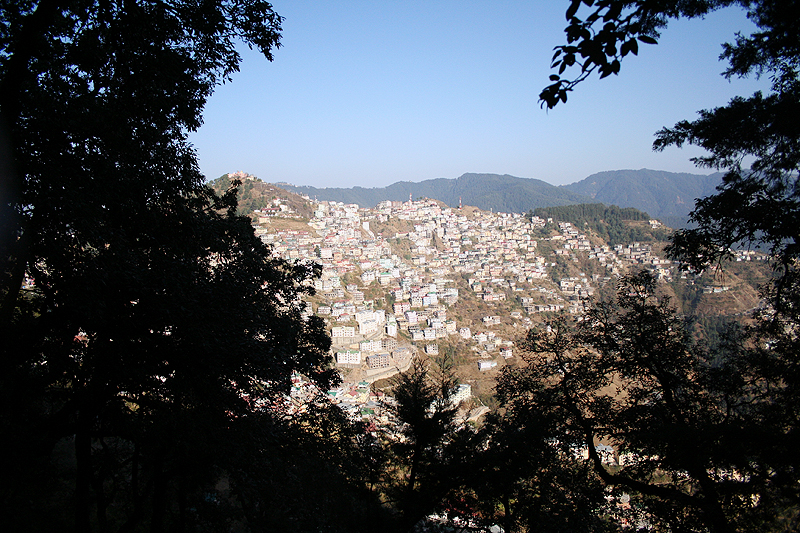
Shimla is located in the north-west of India in the foothills of the Himalayas, and in the state of Himachal Pradesh. It was discovered by the British in 1819 and soon became the summer capital of the British Raj, and a major base for them.
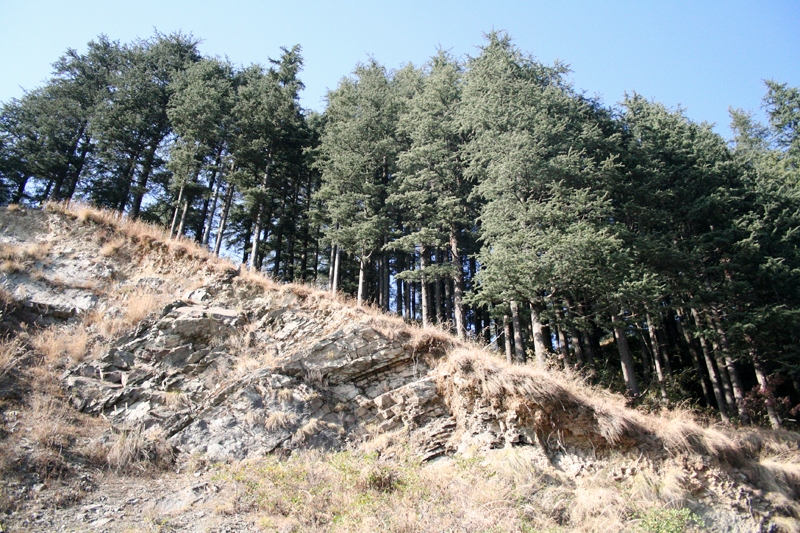
Getting up here by road is crazy. There are vertical drops by the roadside and no barriers at all. The roads wind up the mountains and are often occupied by large trucks – so imagine going around a corner, and in the opposite direction a truck is speeding right towards you.. it was honestly like being on a roller-coaster. I was on the edge of my seat for most of the journey.
Finally we made it to Shimla – but even then the roads are so narrow that we got stuck several times with other vehicles. I’d have no patience if I lived in a place like this – it was so frustrating!
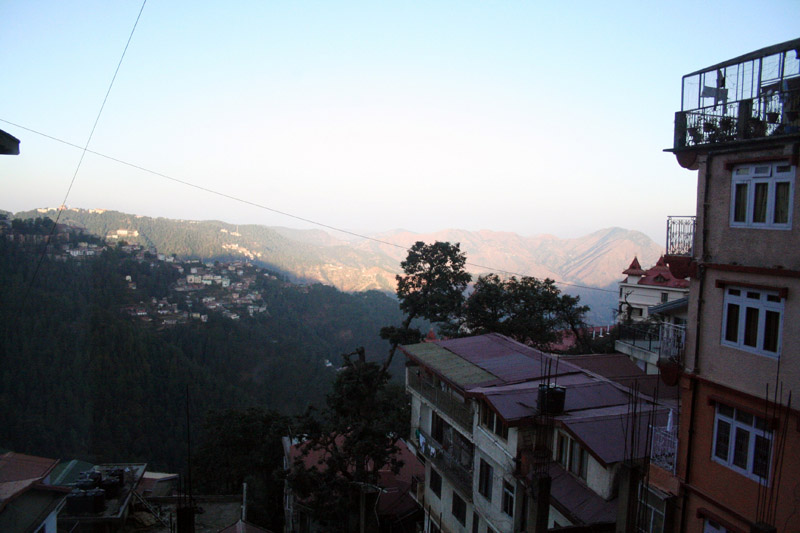
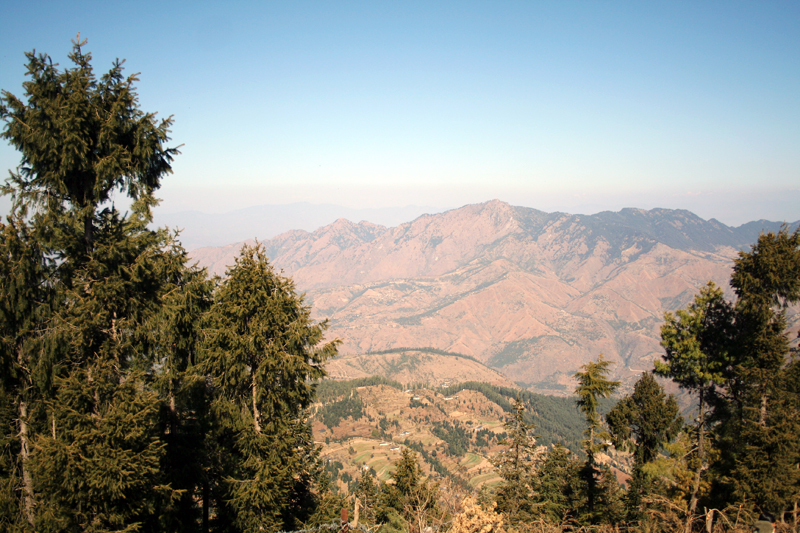
View from the hotel
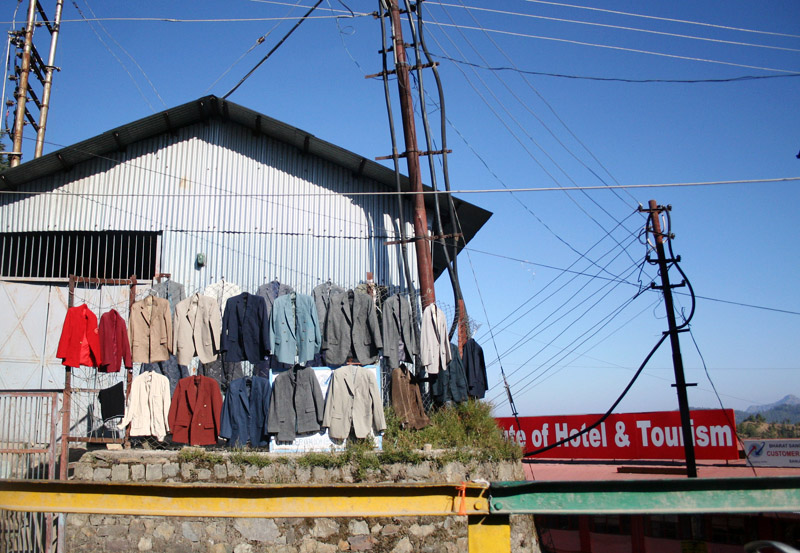
We went to Kufri which is located 19kms from the centre of Shimla. It was once part of the kingdom of Nepal before the British “found” it in 1819 – until then it remained mostly undiscovered.
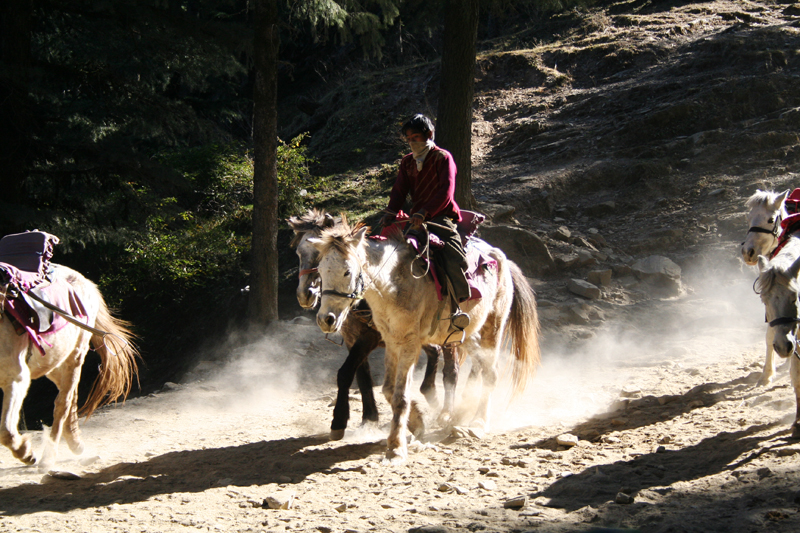
Kufri is one of the highest points in the surrounding areas of Shimla, at a height of almost 9,000ft, and the only way to get there is by foot or on horseback.
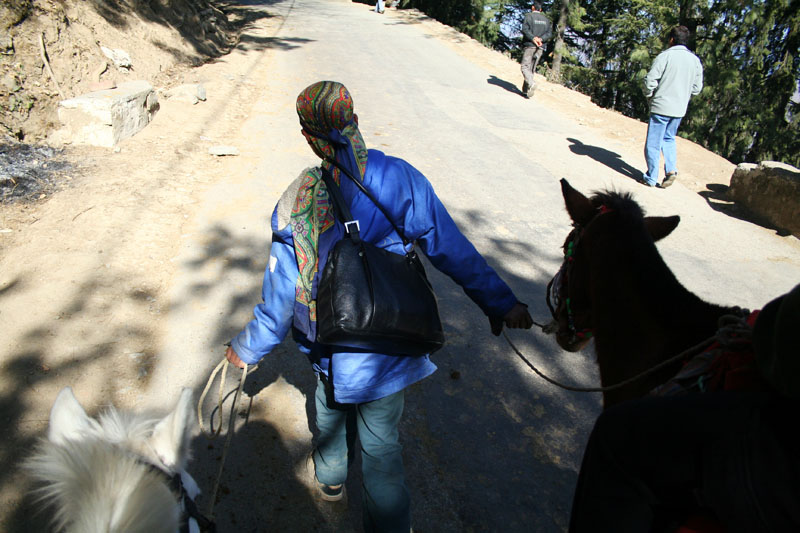
We had a young boy accompany us on the way up – in fact, most of the workers here seemed to be young. He said he’d been doing this for 2 years.
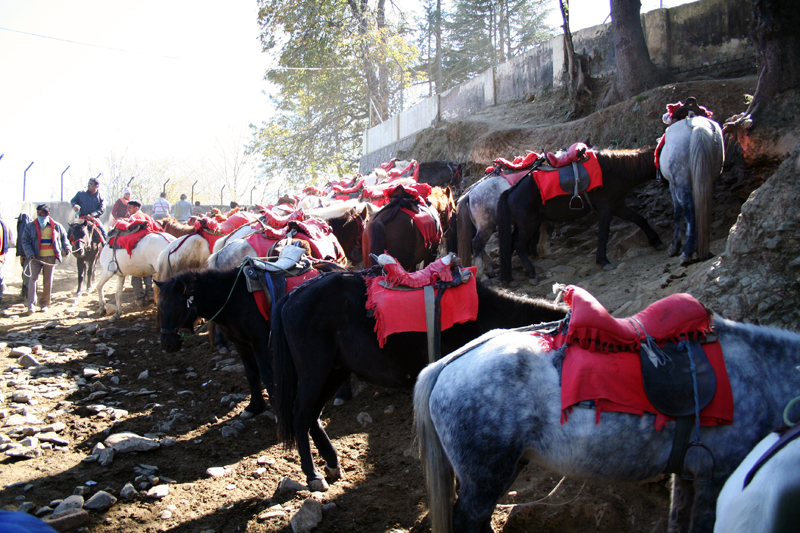
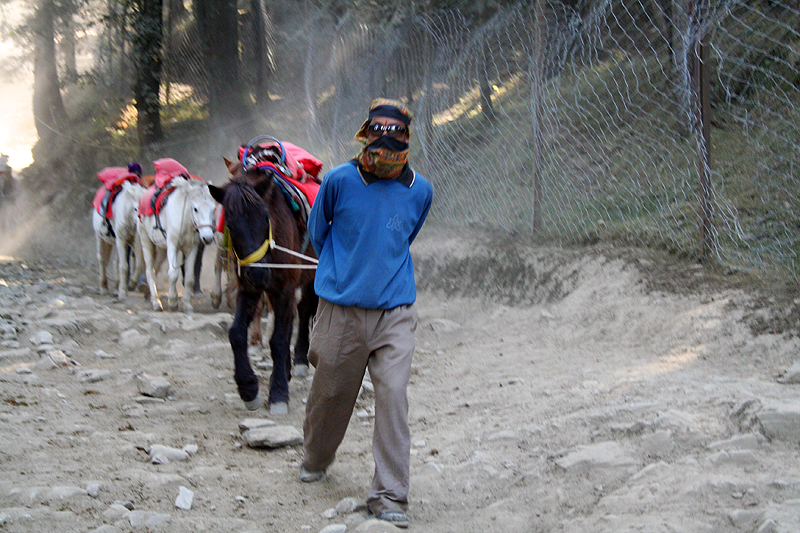
It was quite an unsteady ride up. The horses would walk really close to the edge of the path and as I’ve never ridden a horse before, it was quite a first experience! Often horses would randomly be running down from the opposite direction making it all the more scary.
At the top
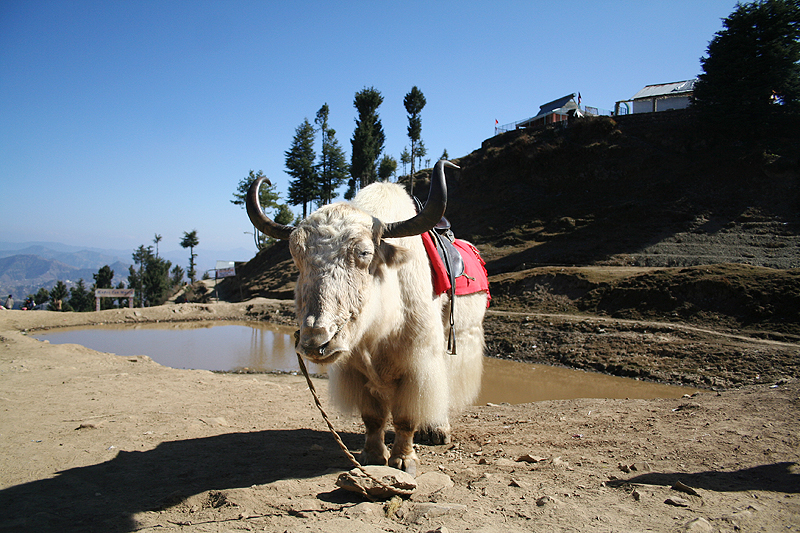
I sat on a yak! (Yes, I’m not sure what’s with the pose either)
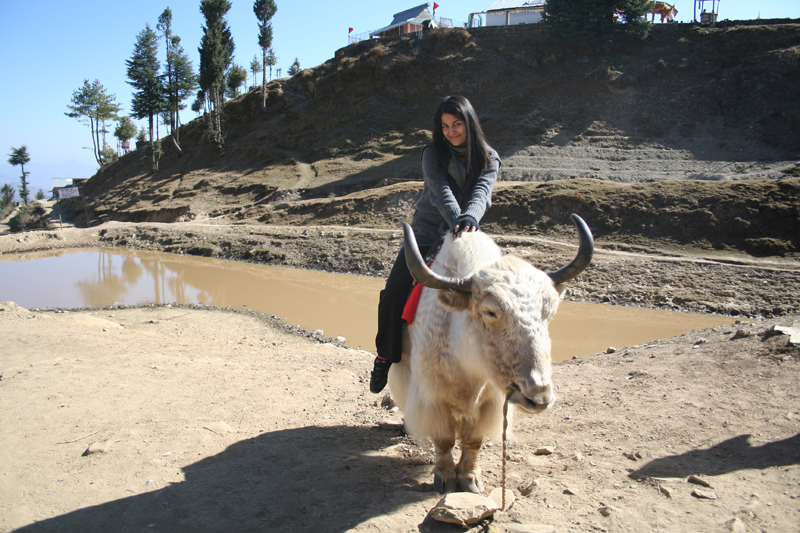
There was the opportunity to dress in traditional gear and take photos, so we thought why not!
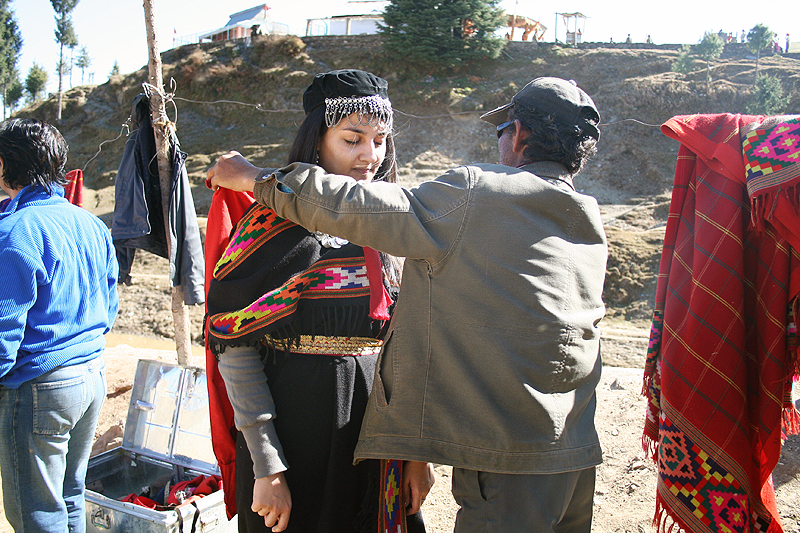
It wasn’t the most flattering of outfits – it made me look pregnant for starters.
The photographer suggested I pose with the yak. Hmm..!
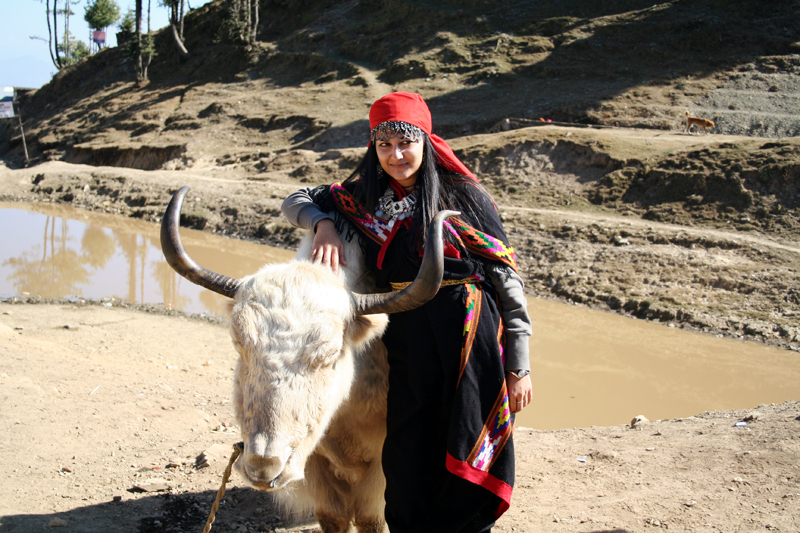
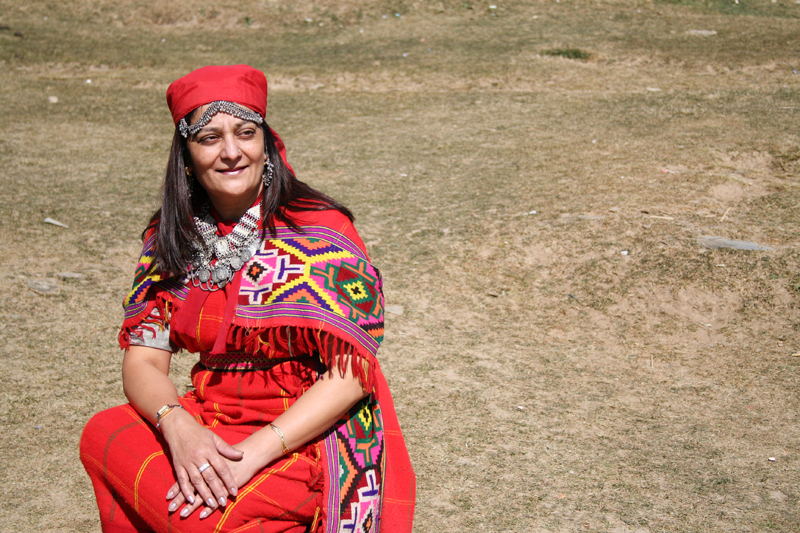
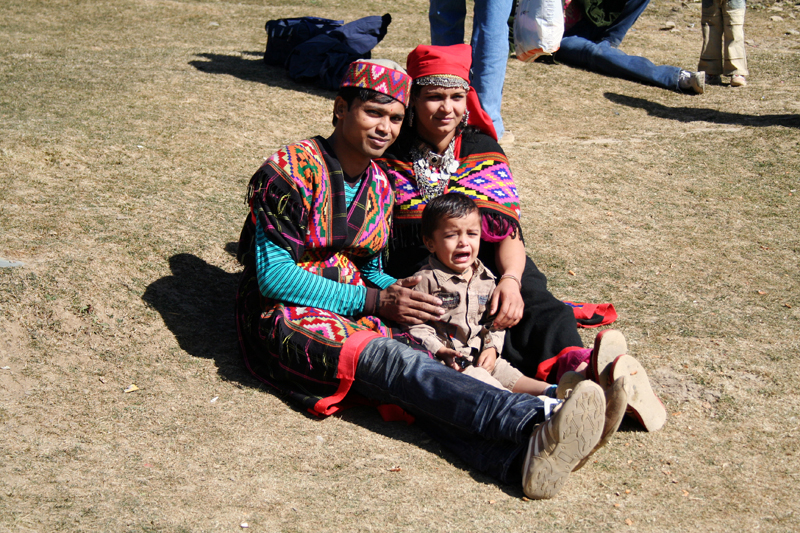
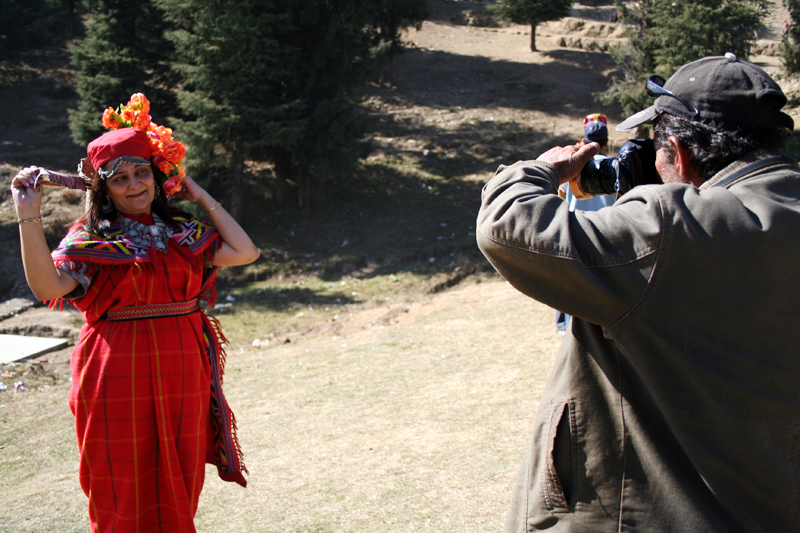
The poses were ridiculously tacky, as you can see, and they got worse – somehow I think I’ll omit the rest. 
There was a temple nearby. You can’t see it very clearly but if you full-view the shot, the photograph in the bottom right shows how the temple looks in January – basically covered in snow.
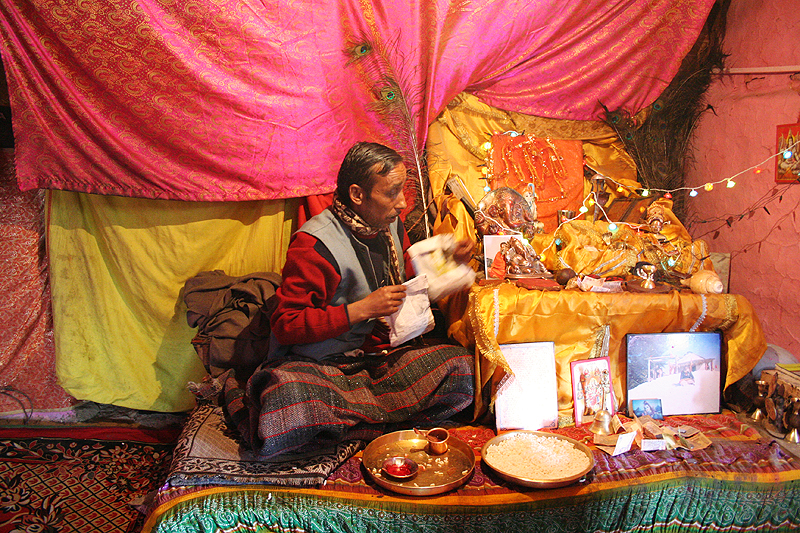
It’s a good job we visited Shimla in November. The climate is quite diverse due to the high altitude, and by December the entire area is covered with snow and many places are inaccessible. It was around 17C during the day in November when we were there, and at night it dipped to around 7C, so nothing too extreme.
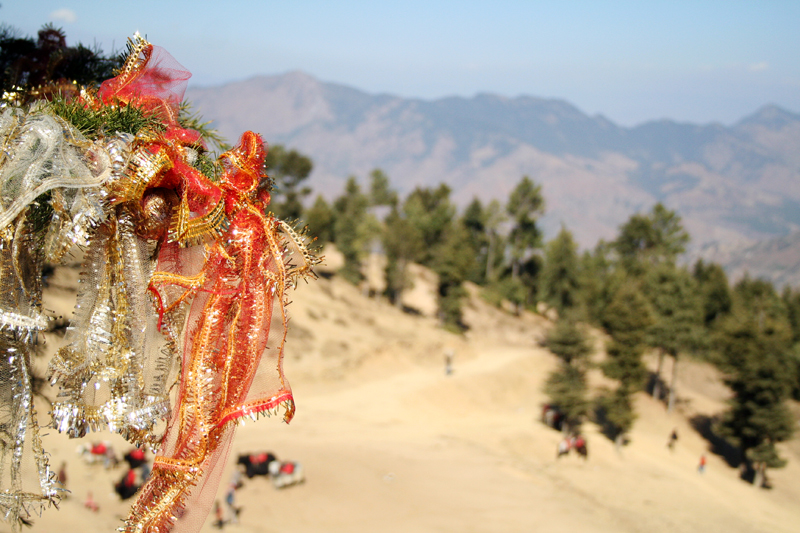
The man in the temple handed us scarves to tie outside.
This woman was really friendly – and she made the best tea and tiki (a kind of fried, flat potato snack with herbs and spices).
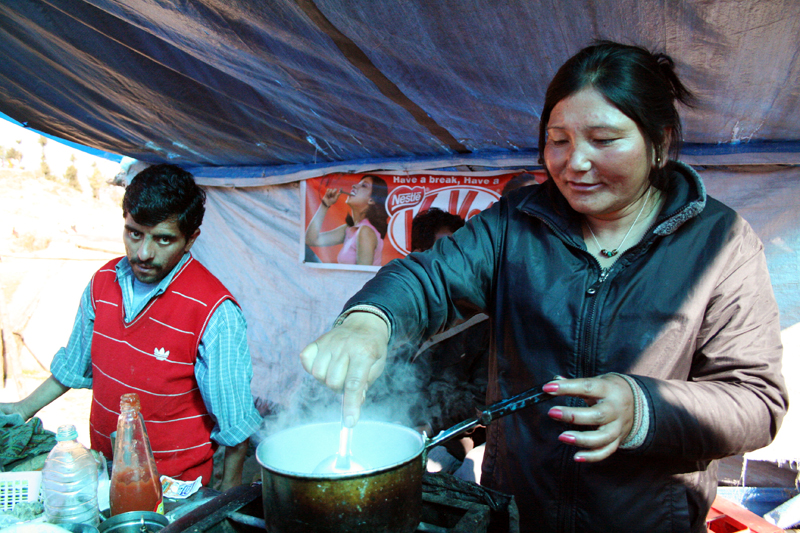
You can see that she’s Nepalese, and there were many of them around due to the close proximity with Nepal, and the fact that Kufri itself was once a part of Nepal.
There was a telescope station with telescope operators who pointed out various landmarks as well as the snow-covered Himalayas.
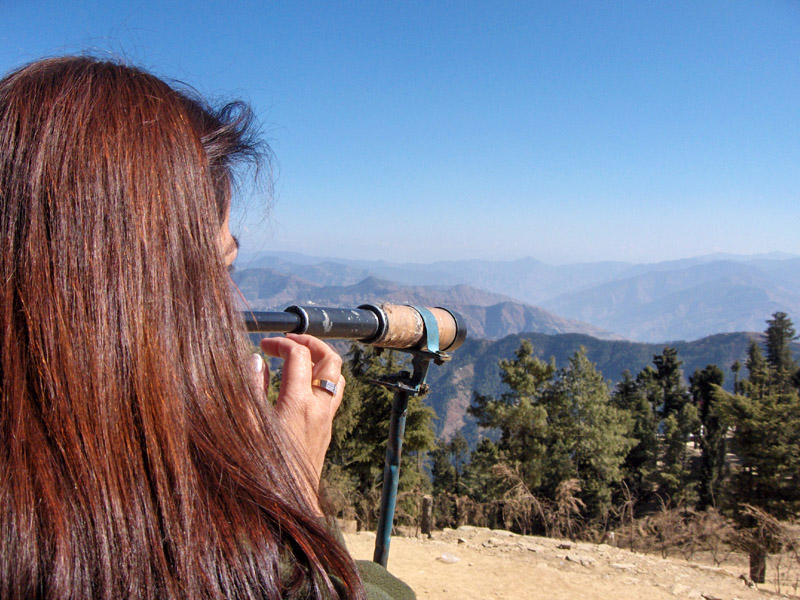
I can’t remember what the locations were, but for 25 rupees (30p) the operator offered to take pictures of them using my little compact digital, pointed through the telescope.
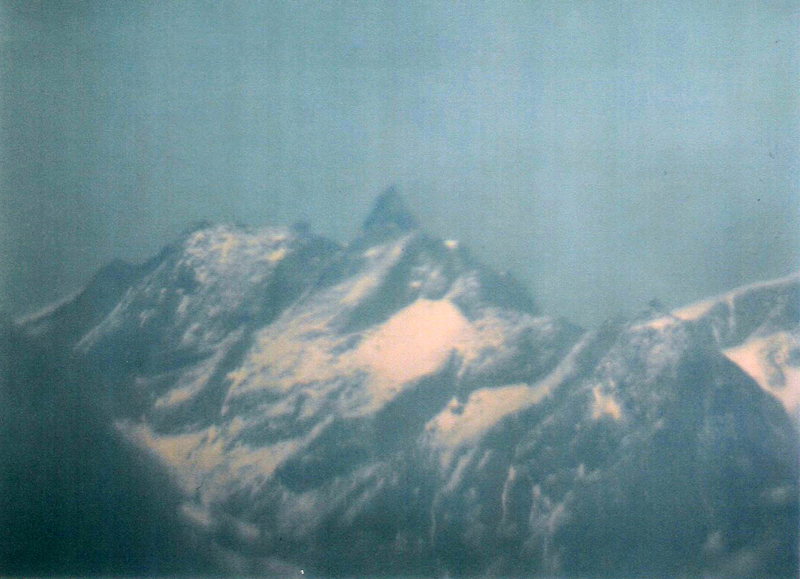
As you can see, the quality isn’t so great!
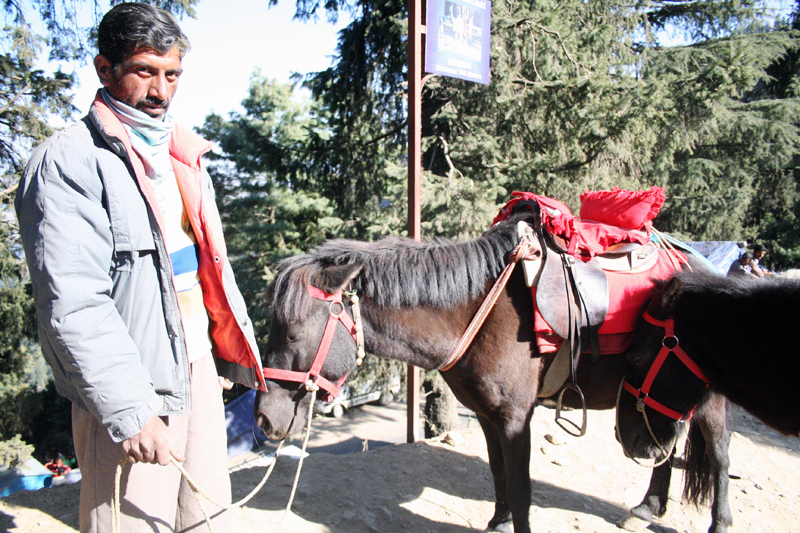
On the way back down we had this friendly horseman
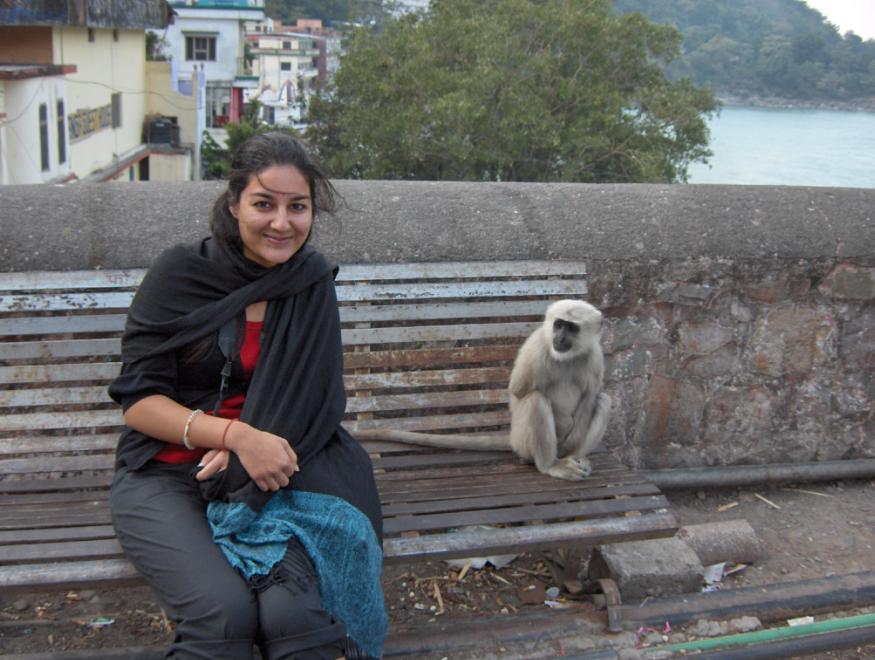
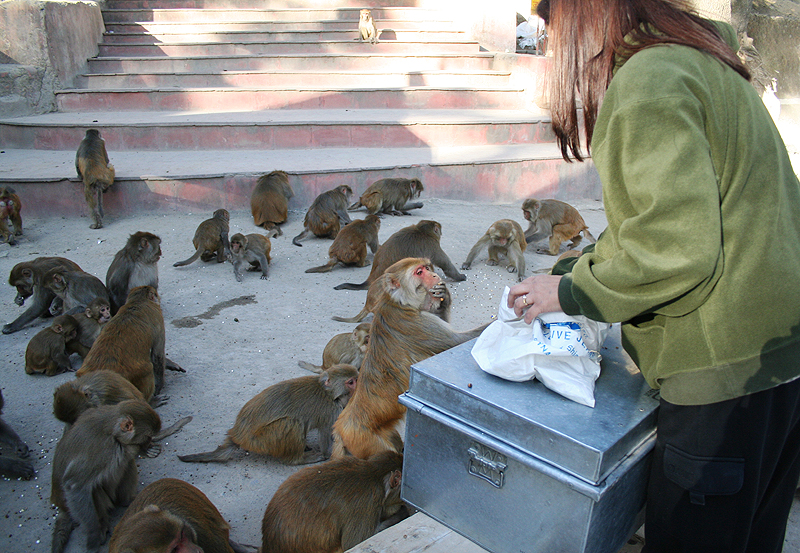
After Kufri we went to Jakhu Temple, which is dedicated to the Hindu monkey god, Hanuman. I didn’t think there would be so many monkeys there 
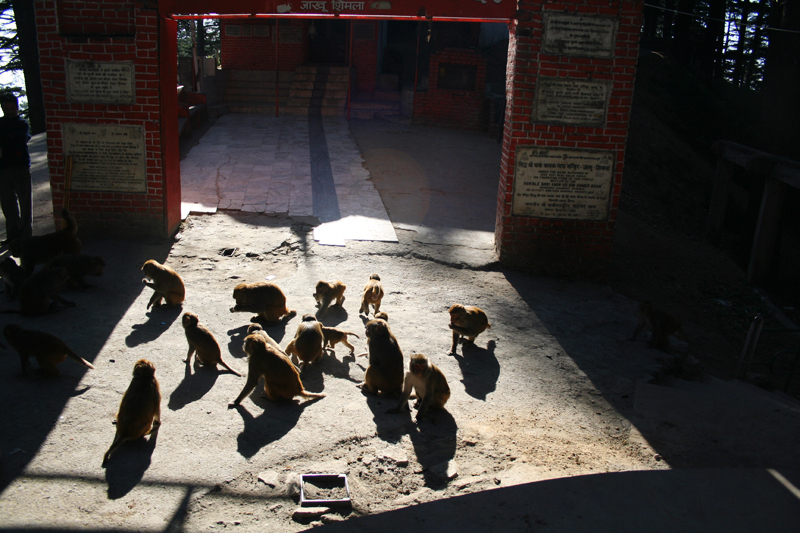
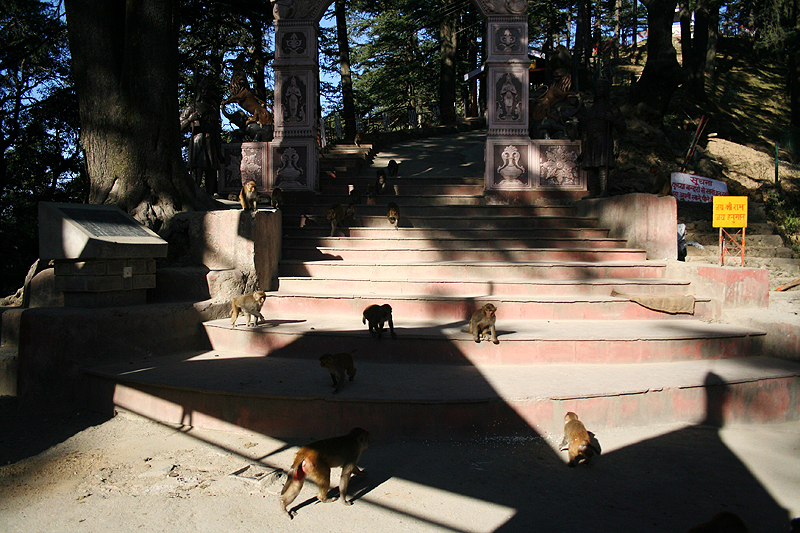
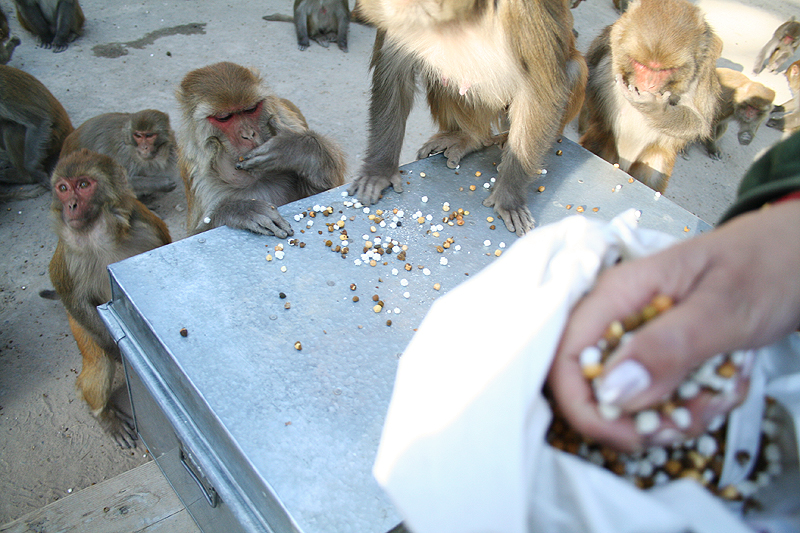
I fed them 
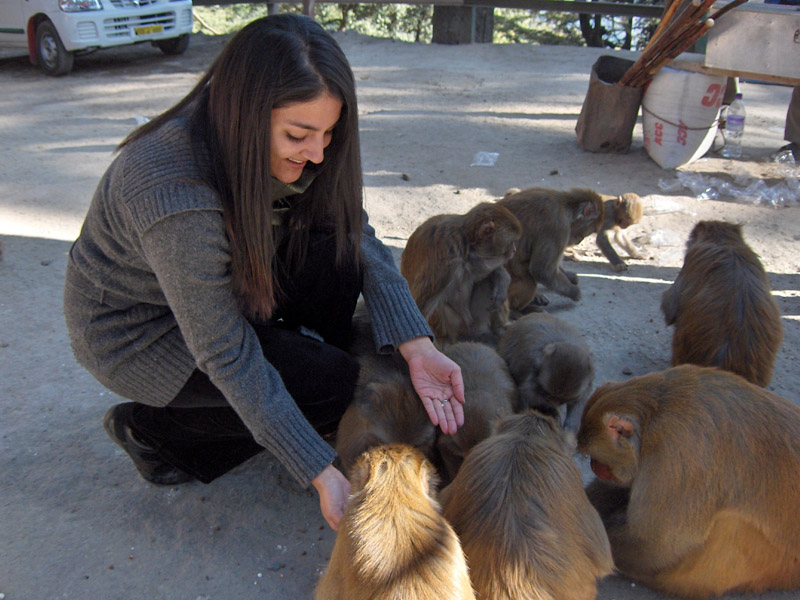
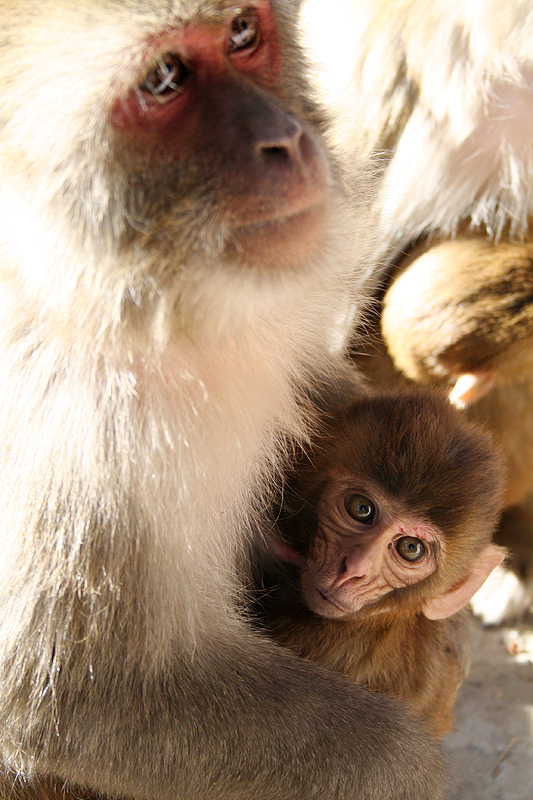
They were so cute 
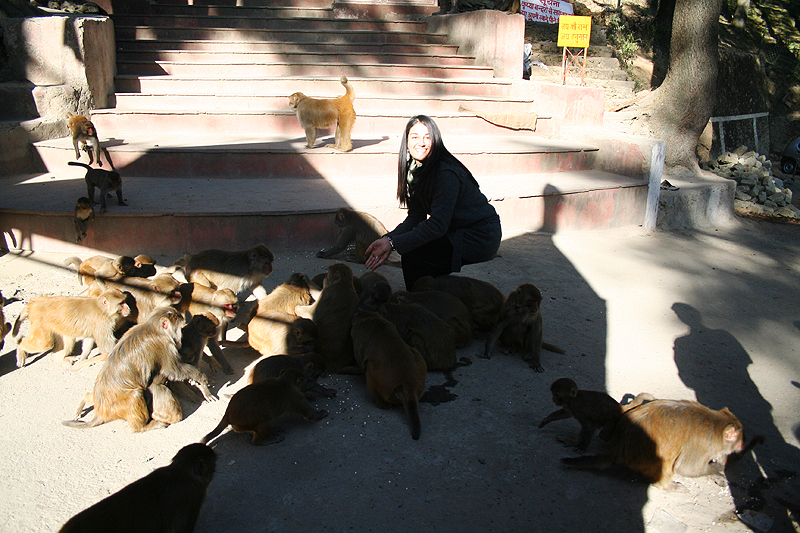
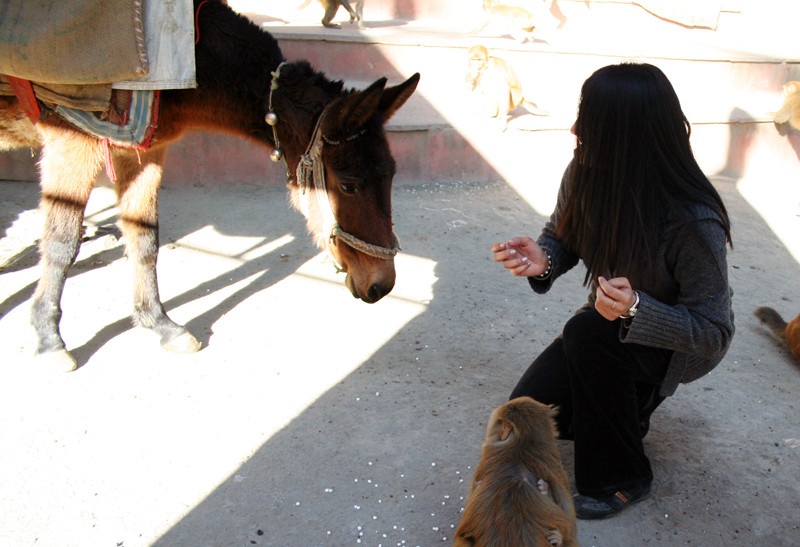
A donkey came out of nowhere (literally), confusing both me and the monkeys
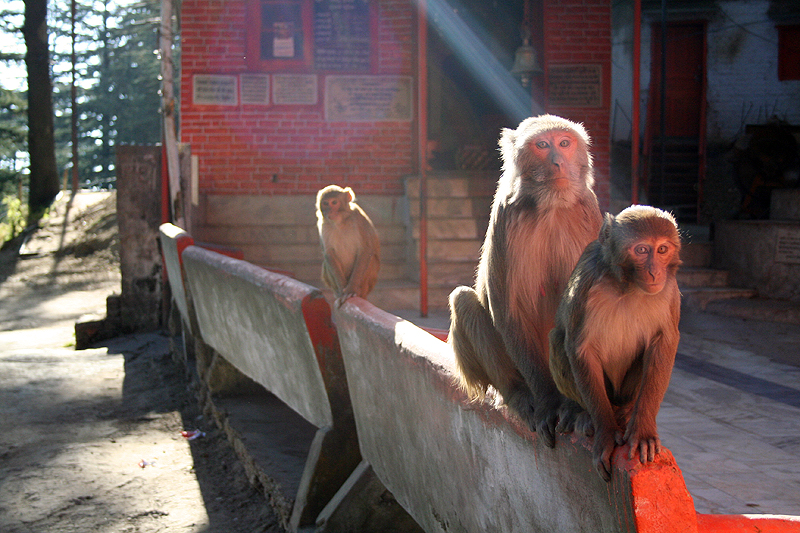
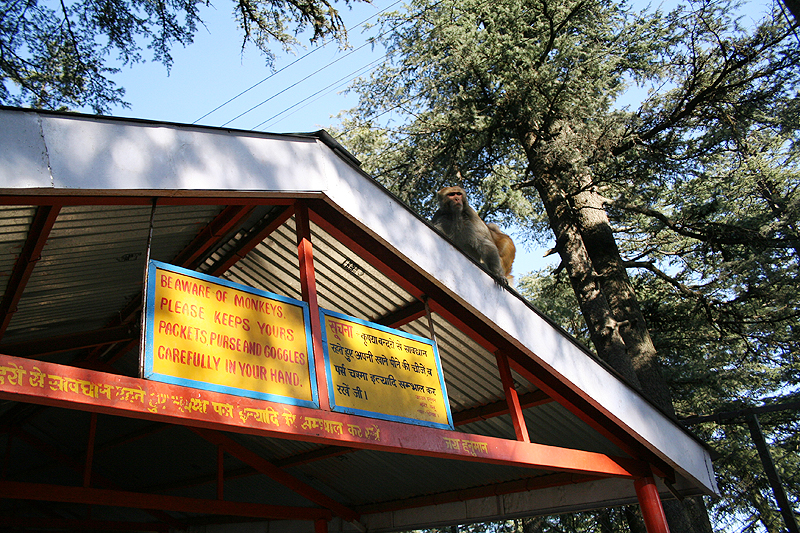
This sign was there for a reason..
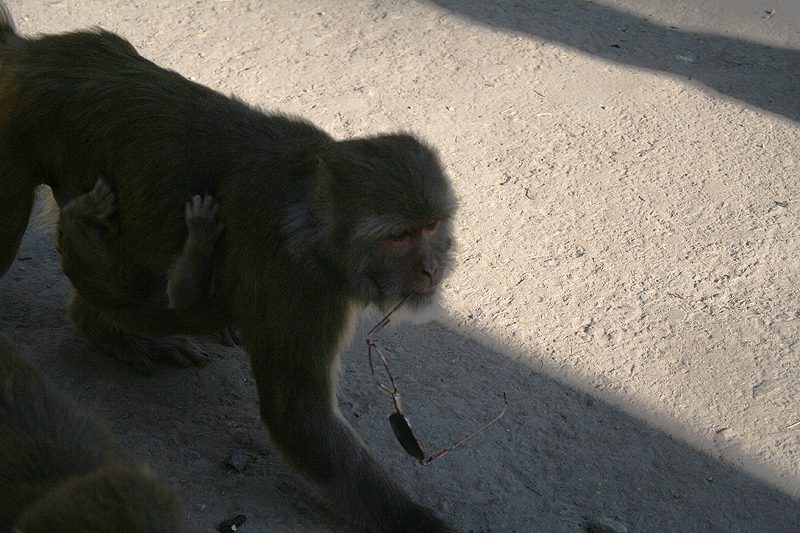
Earlier, a woman had left the temple telling us to be careful of our belongings because a monkey had snatched her glasses. Oh dear..
I was all too wary myself – after getting out of the car, before I’d even spotted any monkeys, one of them suddenly came up behind me and grabbed my bag. I literally had to fight with it to make it let go! That’s right – I fought a monkey and WON. Go me.
Important advice if you ever happen to come across monkeys – keep your belongings strapped onto you as they will grab anything!
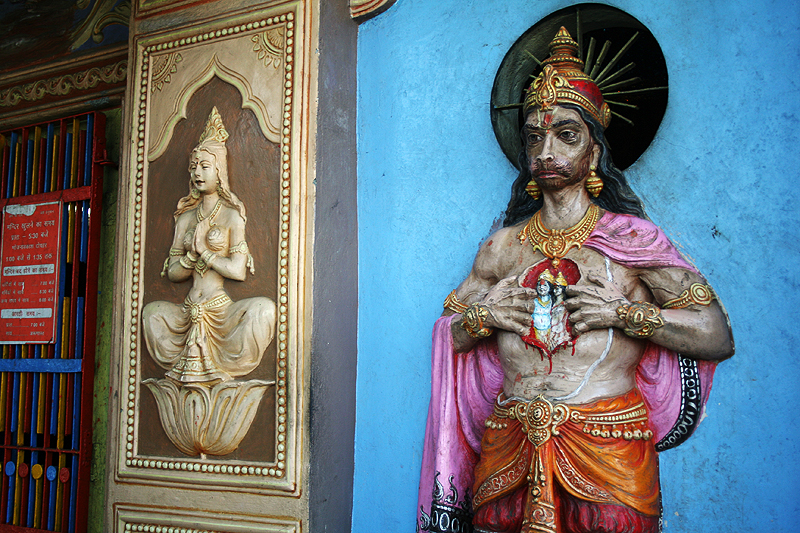
Inside the temple, a man was reading out someone’s horoscope.
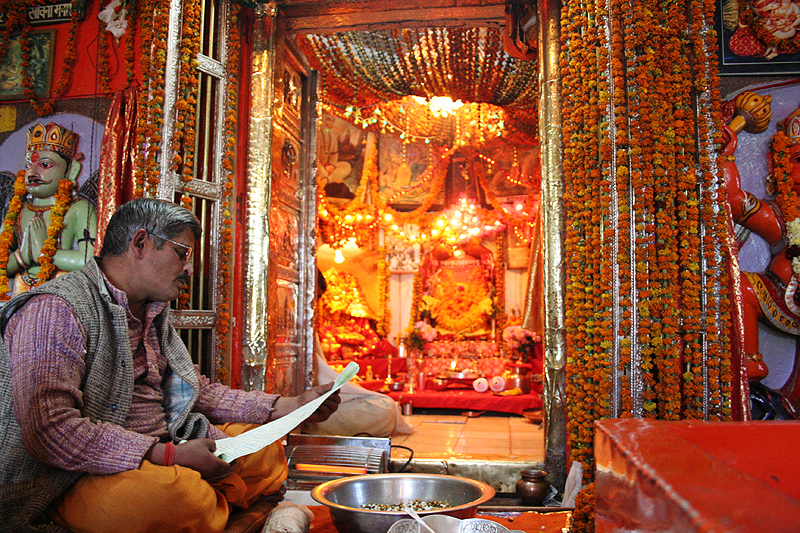
He asked me if I wanted mine done – all he needed was the place and date of my birth. I refused; I don’t really believe in that kind of stuff, and in any case, I didn’t really fancy hearing him tell me something negative!
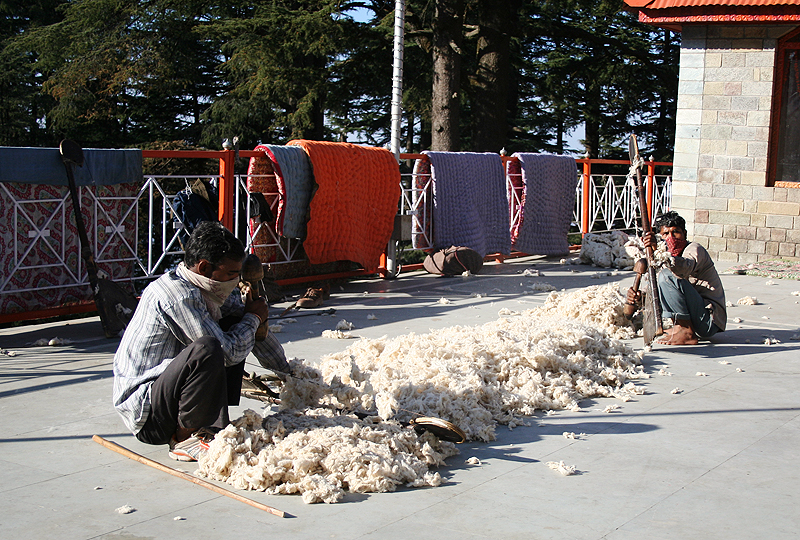
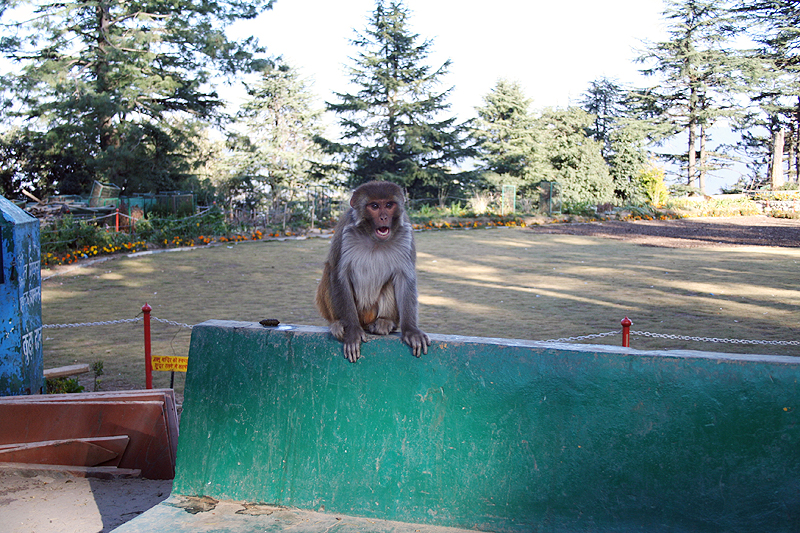
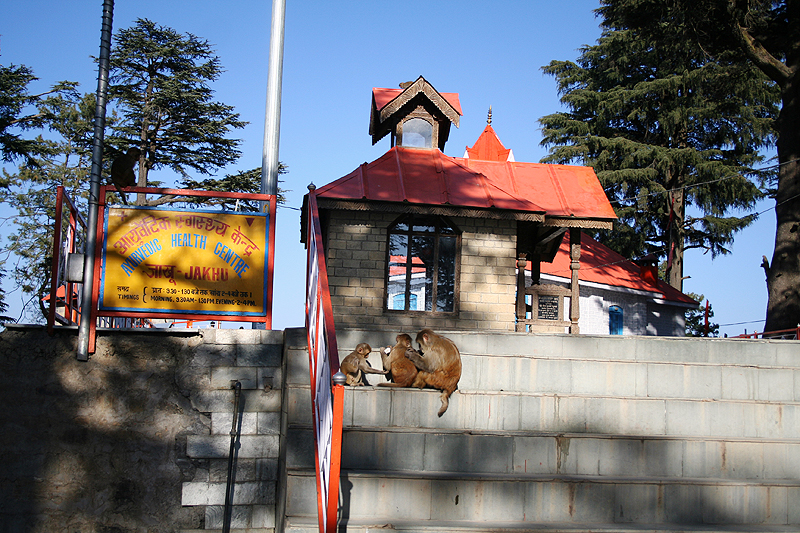
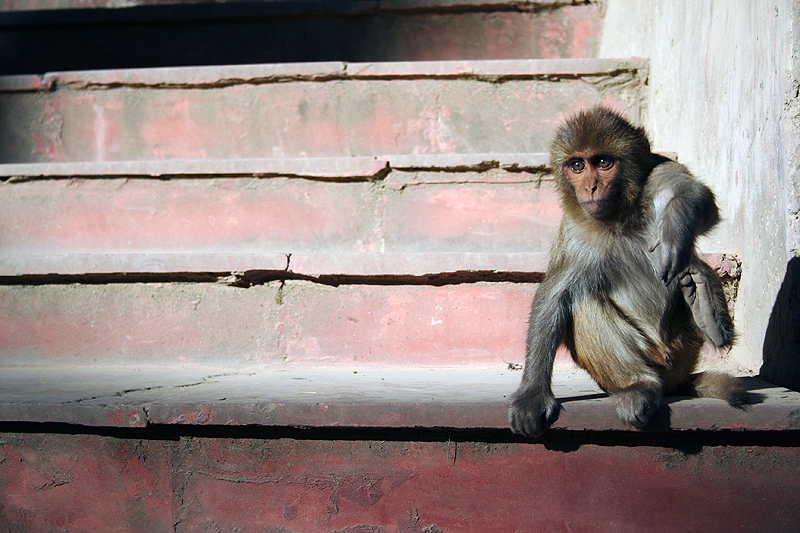
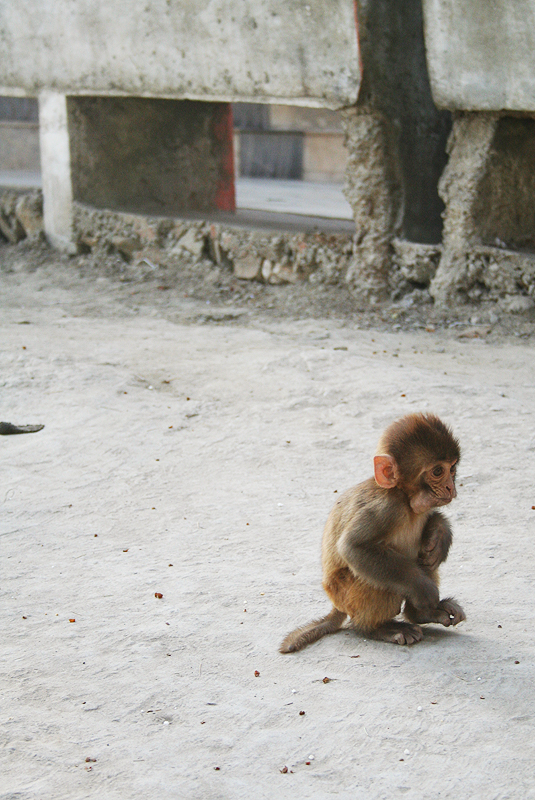
Awwww
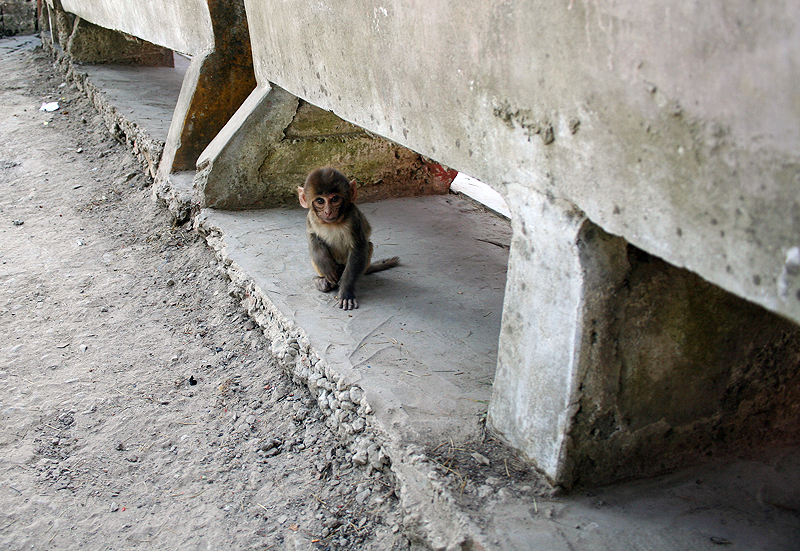
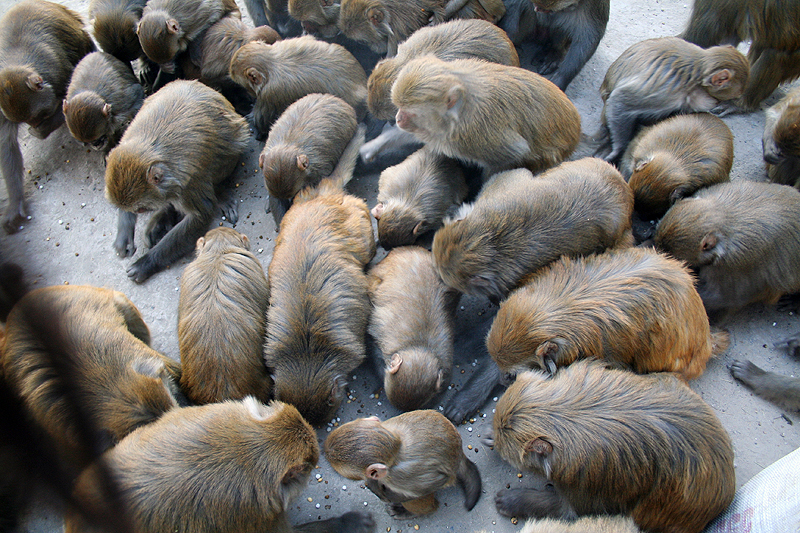
More monkey feeding
In the evening we went to Shimla’s one and only shopping mall. To get there, you can either walk (think steep, uneven steps), or take 2 lifts for 5 rupees. The lazy Westerner in me thinks the latter is the better option!
Even getting around the mall itself was a mission
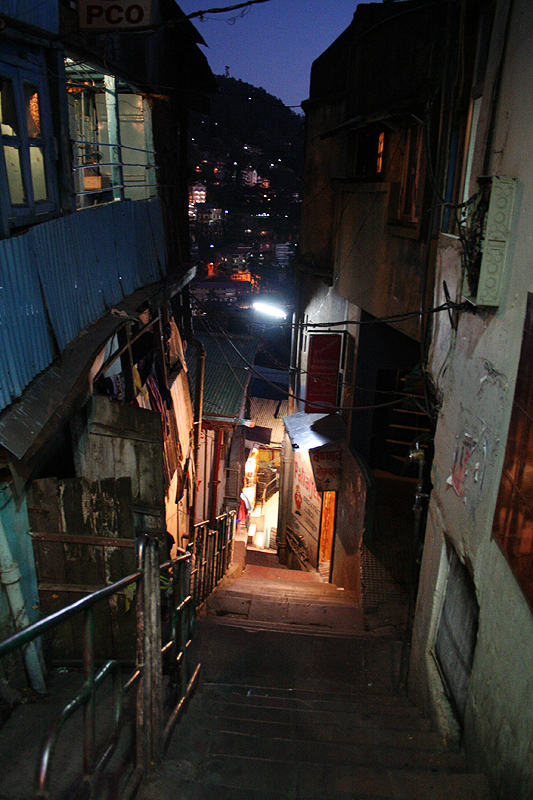
The streets were narrow and really steep, and nothing was on one, flat level. I felt dizzy walking around! It made me wonder why this city was developed and built up to begin with. Surely it’s too much effort to build houses and shops here? I saw old people trying to walk around – one woman grabbed onto me as I was walking down the stairs. She was clearly struggling. This really isn’t an ideal city for the elderly! Even medical centres were in awkward alleys.
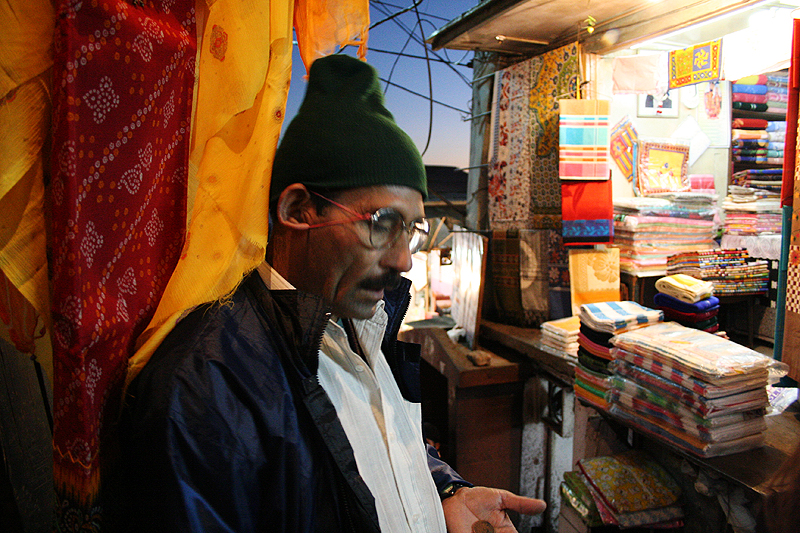
This stall owner had a novel way of keeping his glasses on
Shimla is not only different to the other places I’ve visited in India in terms of its climate, land and architecture, but also its people and culture. Locals elsewhere seem more talkative and social, whereas here local people mostly kept to themselves and were far more conservative.
For example, in Mumbai, as soon as you walk into a shop people come to your assistance right away, and their enthusiasm and eagerness is almost overbearing. However, here in Shimla, that doesn’t really happen. People aren’t as keen to help or provide information if needed.
These people were extremely helpful, though.
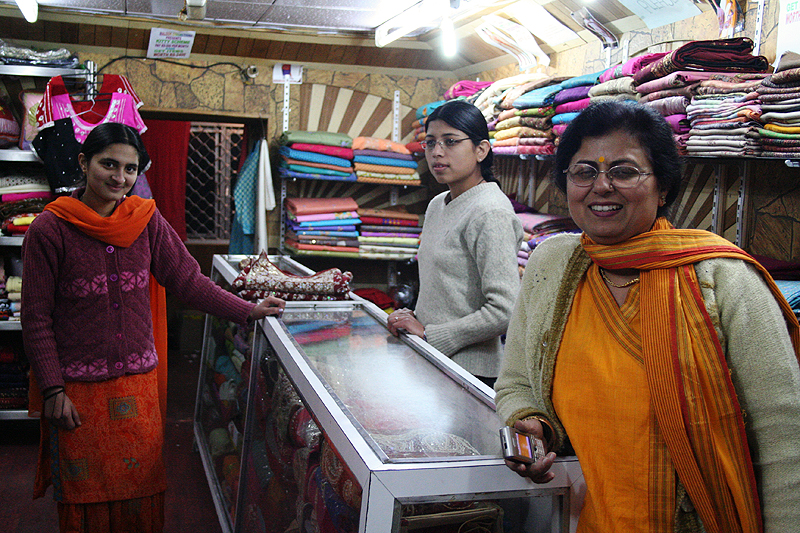
By far, the nicest people we met in Shimla. They owned a tailoring shop, and were very hospitable and sweet.
The hotel we stayed at was pretty much run by one guy. It was rather ridiculous – the same guy was at reception, answered room service calls, and was also the cook (an excellent one at that I have to point out). So he basically slept when he could but was on call 24/7! He was quite dopey but that’s not really surprising considering he probably gets little rest..
Anyway, this is him.
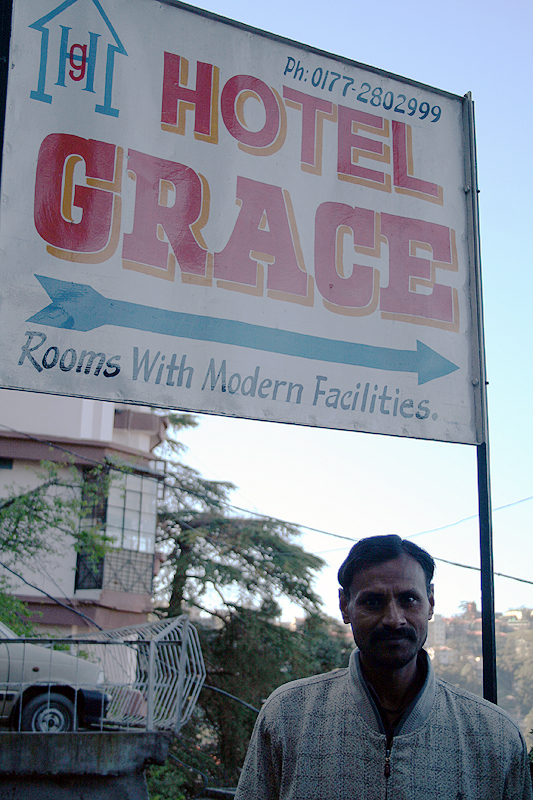
‘Hotel Grace’ is a rather ironic name really! Still, this guy is a legend!
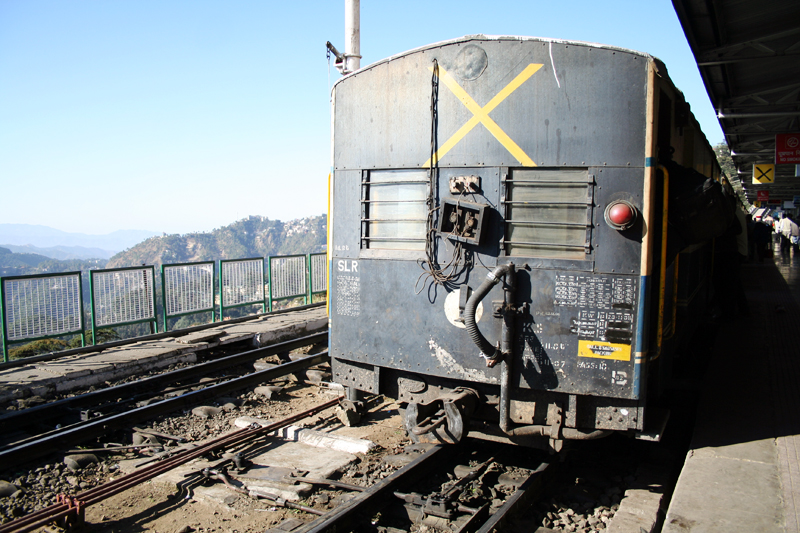
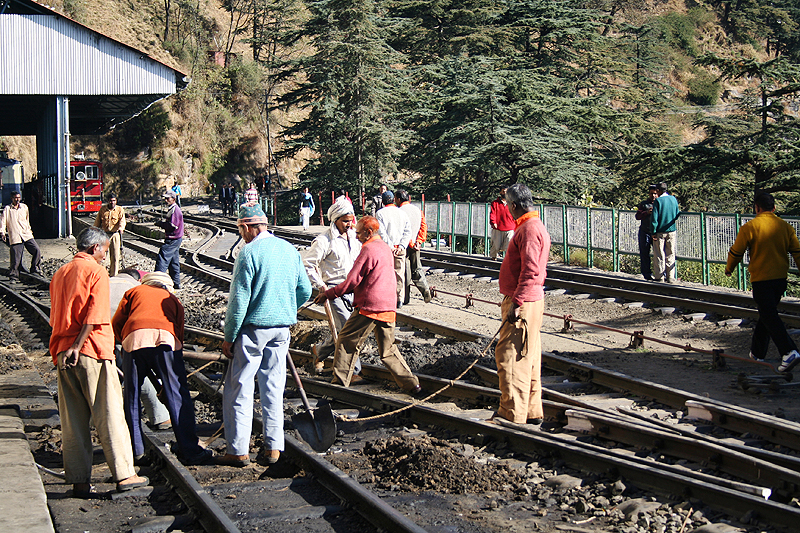
Shimla is known for its narrow gauge railway which features in the Guinness Book of World Records for offering the steepest rise in altitude in the space of 96 kms.
The trains here are known as toy trains.
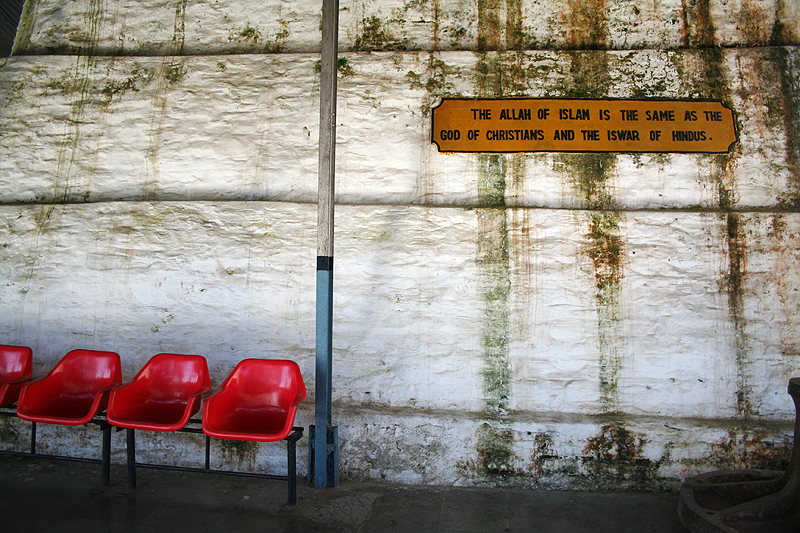
I wonder who erected this sign, and I also wonder how many people agree with it. I know I do.
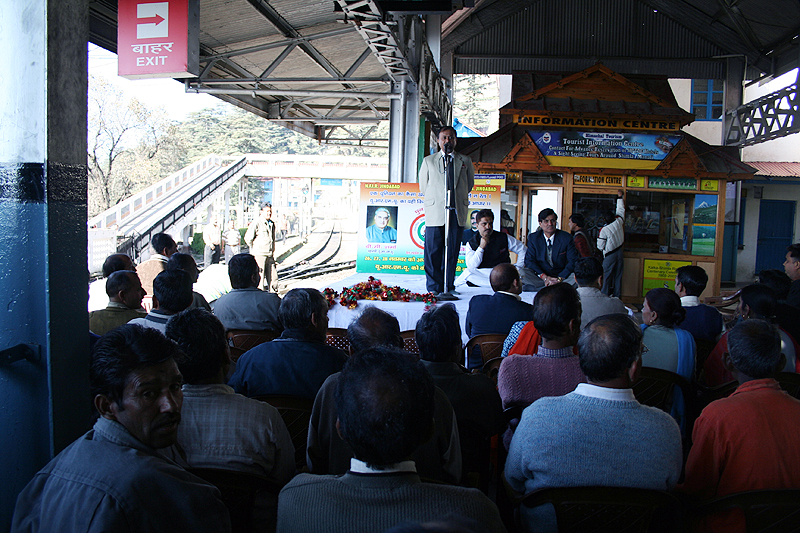
There was some kind of rally going on at the station to do with the upcoming elections
The toilet in the train was one of these
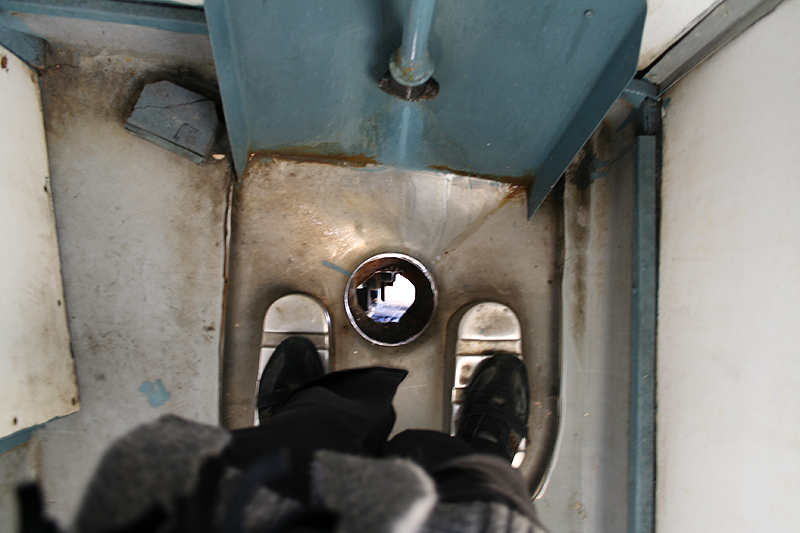
I didn’t use it 
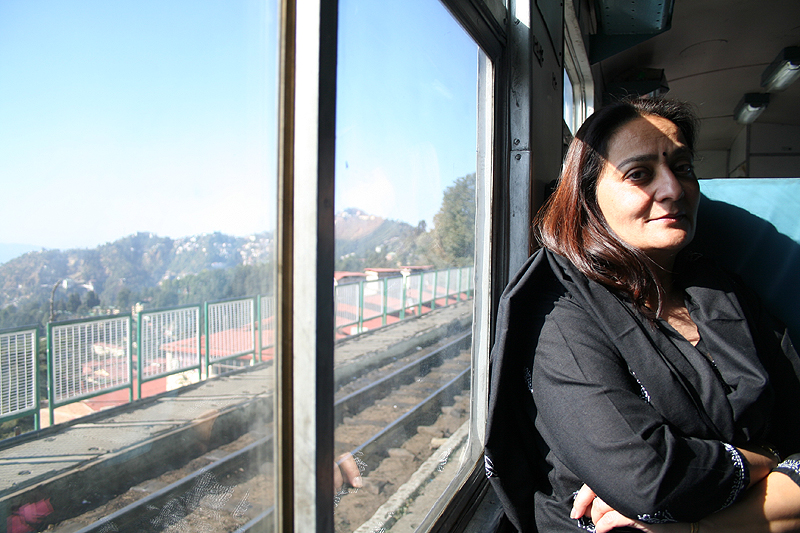
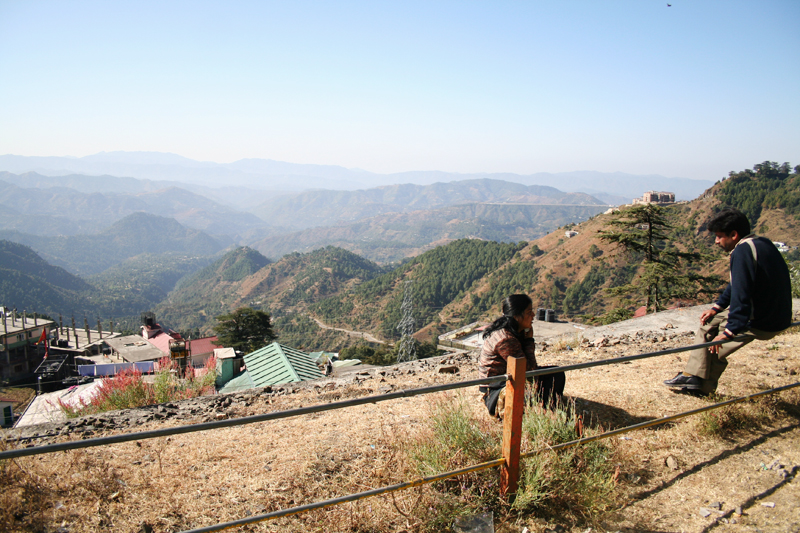
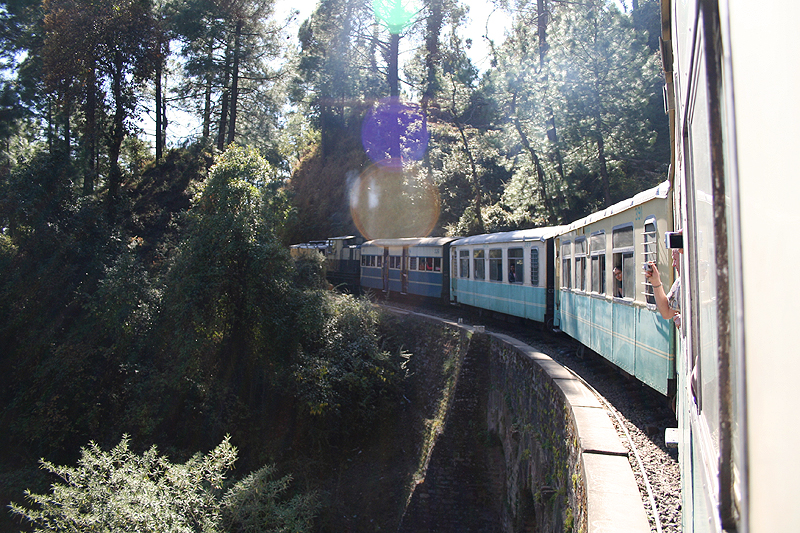
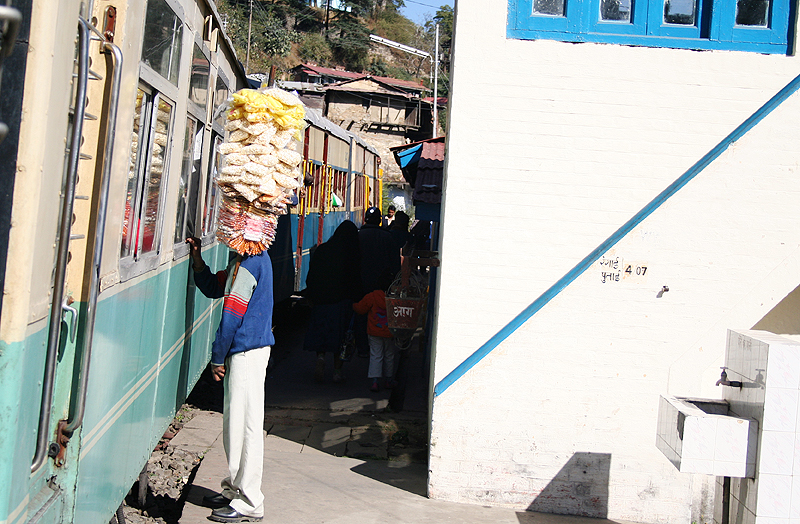
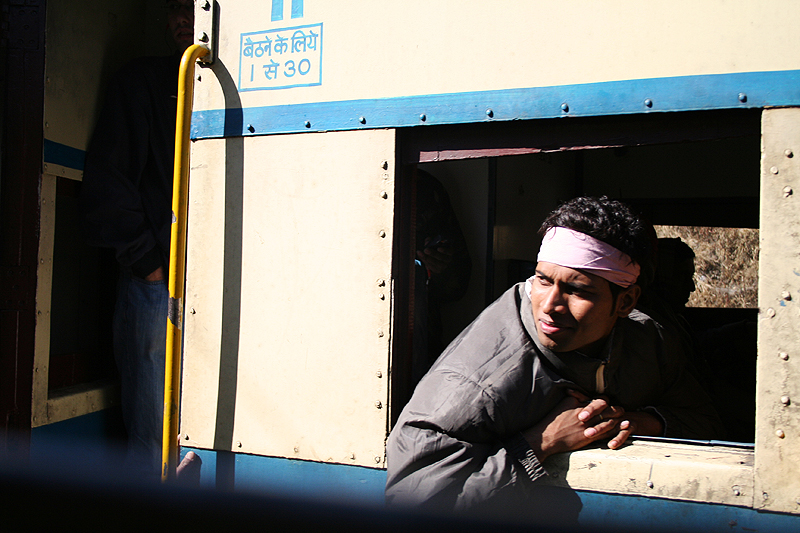
The toy train was definitely worth travelling on. We headed out of Shimla on it, and then hit the road again.
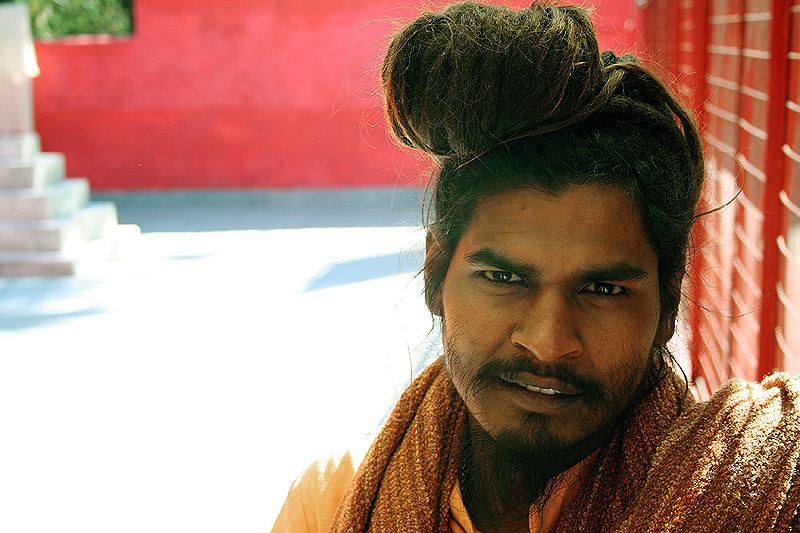
In India there are always temples and places of religious significance on roadsides. This man spends his time at a segregated temple an hour or so away from Shimla.
The one thing I couldn’t get used to in India are the toilets. You have to carry toilet paper around with you – I still don’t know how a bucket and water is going to do any good – what do you dry yourself with?! When I went to wash my hands in one toilet I was impressed at it having a soap dispenser. It turns out the dispenser was full of urine, not soap! I know that’s meant to have anti-bacterial properties, but really now..
Anyway, I took this shot of a grubby mirror in the toilets of a roadside restaurant. Yes, the toilet was outside.
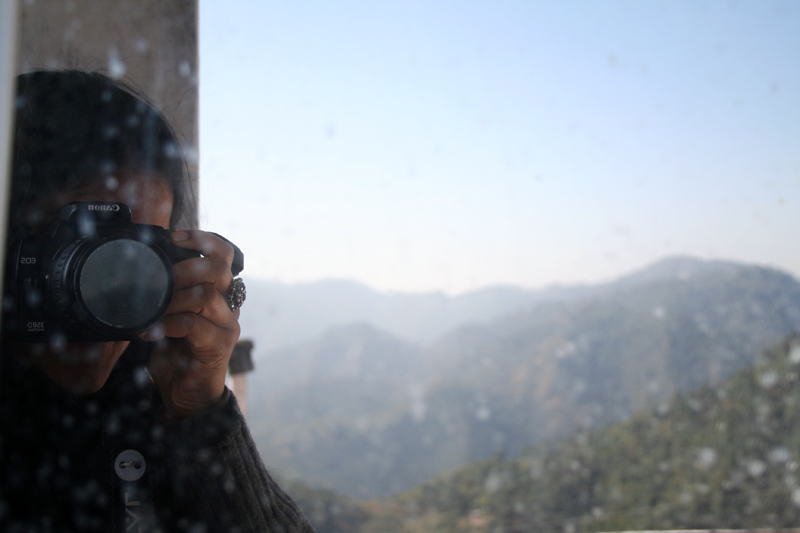
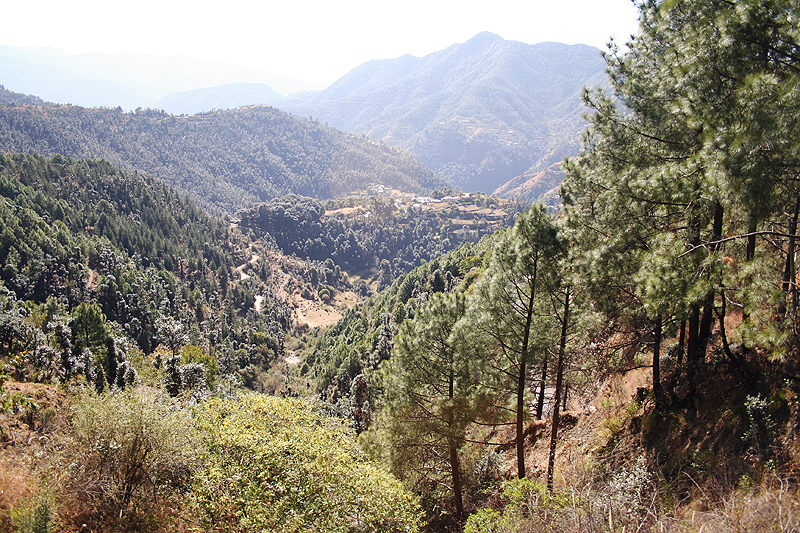
We were still at a high altitude at this point as you can see. I enjoyed Shimla very much – it has a distinct character which is removed from the other places in India that I’ve visited. It’s far cleaner and I didn’t see a single beggar. Prices are more expensive and the influence of the British in this area is apparent. Shopkeepers also speak very good English and they seem fairly well-to-do.
However, I couldn’t wait to get back to flat land!
Next stop – Chandigarh, then Amritsar.
Hope you all had a good Christmas
Onto the second blog of my India trip. Where exactly did I go?
I’ve just figured out how to customise Google Maps – swanky stuff! You can click on any of the markers, as well as the lines to see the distances covered.
View Larger Map
For those of you interested in embedding a customised Googlemap into WordPress, it seems as though this is only really possible with WordPress 2.3 on Internet Explorer, not 2.3.1, or Firefox! With 2.3 and even 2.3.1 on Firefox, after inserting the embed HTML provided by Google Maps, editing the blog is no longer possible at all, which means you either have to make sure you’ll never, ever need to edit the blog before adding the embed HTML, or you have to download a map plugin which currently only allows for maps with multiple markers, not lines! Booo. Using the plugin also means having to manually create the map using code alone, not using My Maps on Google Maps, which is pretty shabby, since creating a map on My Maps is very cool and provides info such as the distance between 2 points. WordPress, please fix this bug! So I’m having to type all this using 2.3 on Internet Explorer. Scary.
Anyway, if you can’t see the above map for any reason, just click here.
So I started off in Mumbai, and we then flew to Delhi. I’d wanted to get the train there but that would have taken around 17 hours and there wouldn’t have been enough time for other things.
I have a few pictures left from Mumbai
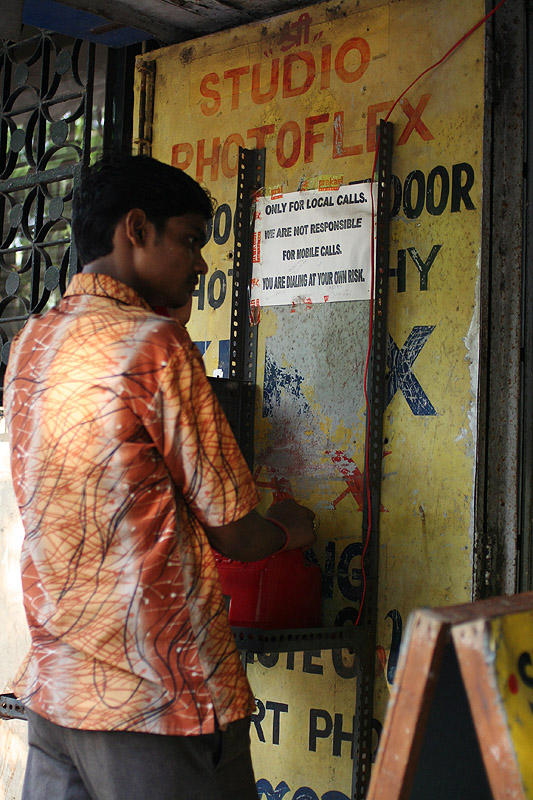
I thought the sign was funny. This was outside a dingy photo studio where my mum had to get passport pictures in order to get a phone SIM card.  To get a SIM card in India, you have to provide identification, as well as a photo. There are also a few forms to fill out. I never imagined getting a phone SIM in India would be such a lengthy process – here in the UK they give away SIMs for free a lot of the time, or you can just walk into a shop and buy one! On a similar note, I was asked for ID in an internet cafe as well. Apparently this is the norm I was told..
Anyway, back in the photo studio. There was no photobooth you see, so a photographer suddenly appeared with a Nikon dSLR, took some pics of my mum in front of some curtains, and then proceeded to edit the pics on the PC.
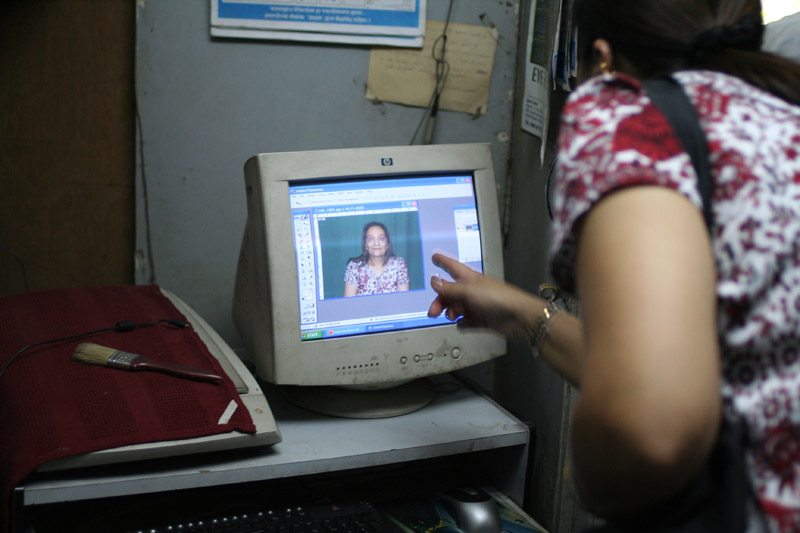
Photoshop seemed a little out of place in this small, shabby photo studio, which I thought was an interesting contrast.Â
Paan being sold on the street
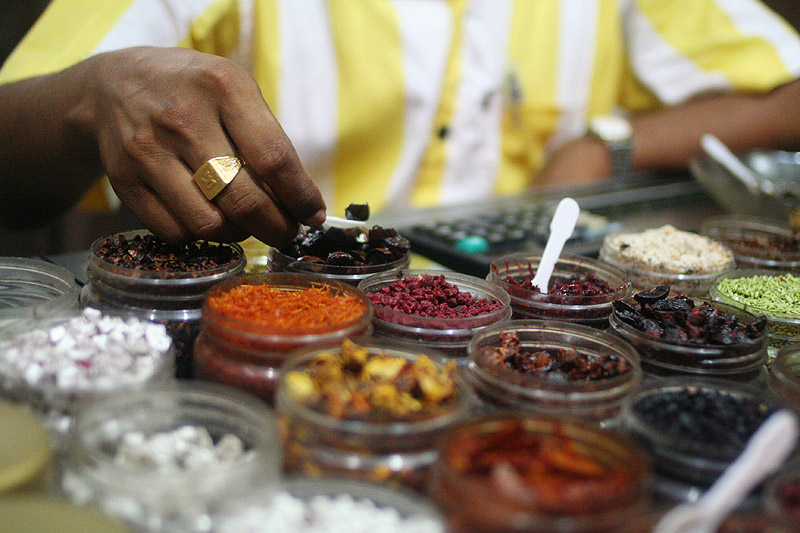
Paan can be a mixture of tobacco, spices and sugar, and is highly popular in India. I suppose it’s the equivalent of chewing gum, but worse for your health!  Personally, I find some of them fairly tasty, but others completely revolting. Generally, I’m not much of a Paan fan.
Taken from the car, I thought this was quite funny
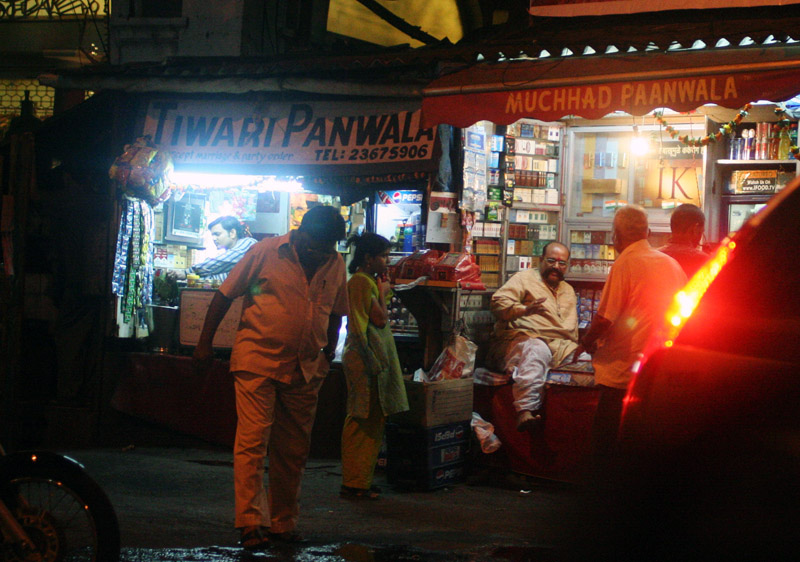
Muchhad means moustache.
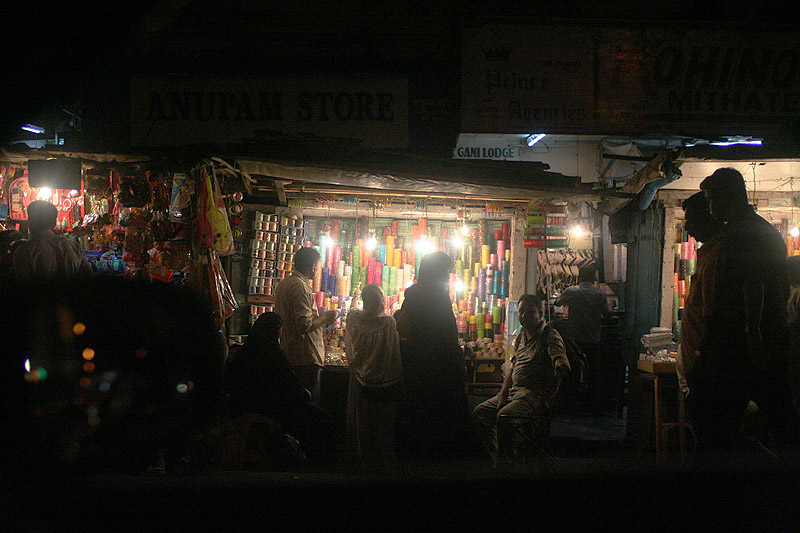
Street stalls in Mumbai are open until quite late, and always seem to be busy. Each one is specialised, with this one selling bangles.
This is why I rarely take self-portraits:
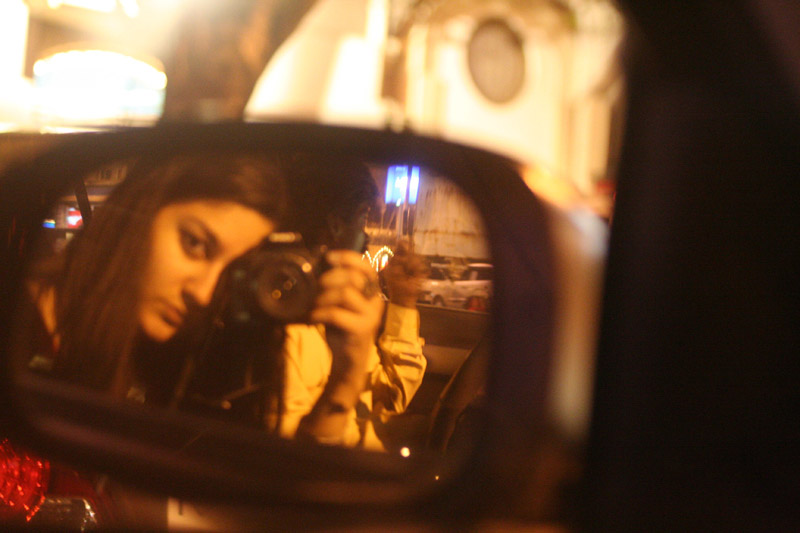
I have no skillZ! That’s Babu next to me, our friend’s driver. He looks like he’s giving the finger in this shot!
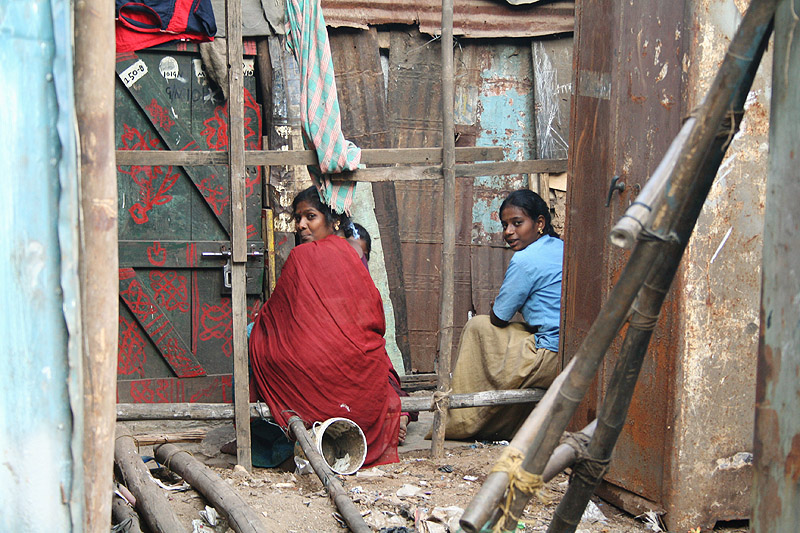
Well, that’s it for Mumbai for now.
Next stop – Delhi, the capital of India.  It’s much more westernised than Mumbai (in terms of how people dress, and the roads, shops, etc.). It also lacks the chaos and mayhem of Mumbai, and feels more civilised, which in a way makes it less appealing to me. I’m not sure what this says about me..hmm..!
Damn reflections..
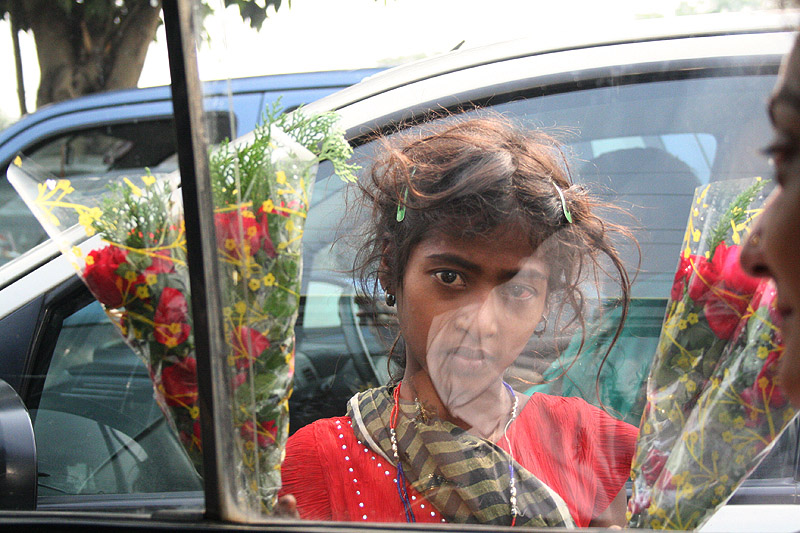
Janpath Market in Delhi is famous for its intricate embroidery.
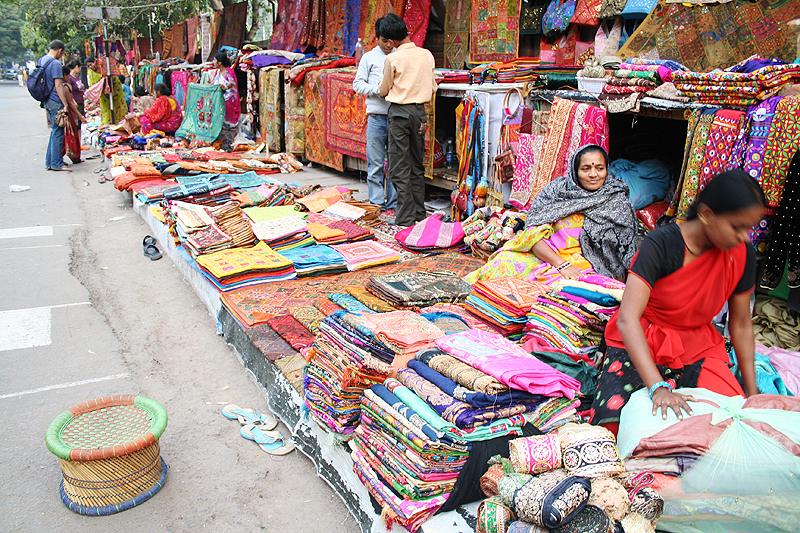
This woman there recognised me from two years ago!
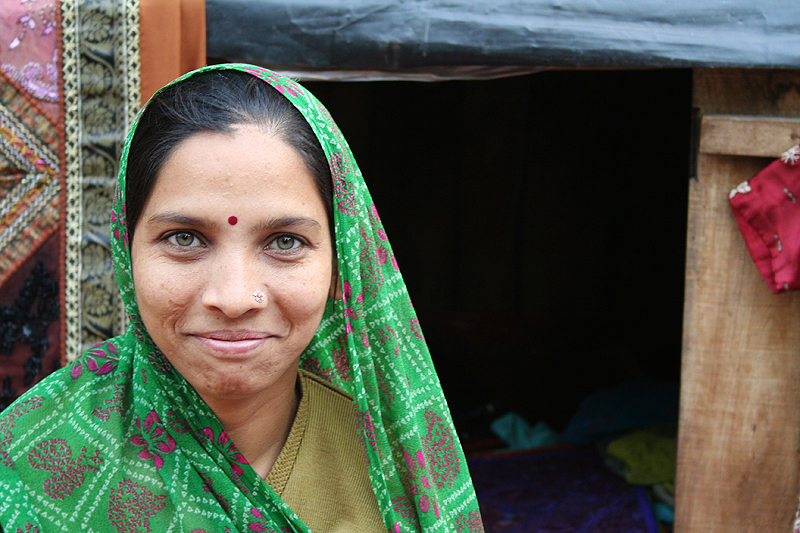
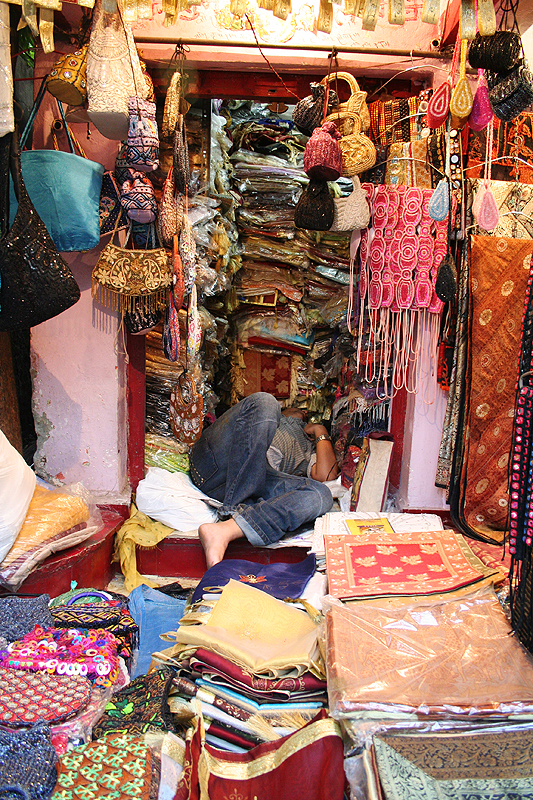
The people on these stalls are highly skilled at ripping people off. Let me explain what I mean. The items for sale are made by villagers, mostly based in rural Gujarat. They spend most of their time tediously sewing sequins and tiny beads onto blankets, shawls, decorations, cushion covers, bedspreads, etc. Women such as these then buy it off them for peanuts and sell them for a much, much higher price in the market. How do I know this?
Well, it is well-known that in an Indian market, you should halve the price given for an item, and it will still be sold to you. I picked up a decorated stuffed elephant and immediately had someone trying to sell it to me, for 650 rupees (£8 or so). I told her I barely had any room to carry it and I’d take it for 150 rupees. I then walked off, not really intending to buy it. She came after me trying to negotiate but I ignored her. She eventually came back with it already in a bag and said she’d take 150 rupees for it. Hm, so let’s see.. 650 down to 150.. that’s around 1/5 of the original price! These people are not going to sell something unless they make a profit, and obviously if she thought 150 was completely ridiculous she wouldn’t have sold it at all, so for her, this was a good price. One can only assume they buy it for close to nothing from the villagers in Gujarat who actually make these items.
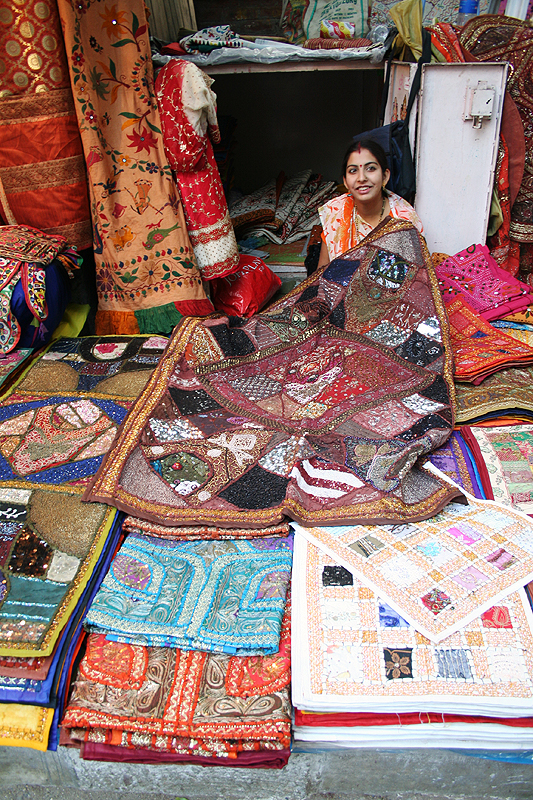
I noticed some tourists negotiating with a lady for a bedspread. The lady quoted 3000 rupees! It was obvious she knew she could get more out of a seemingly ignorant foreigner, so I warned them discreetly to bargain. I mean, 3000 rupees is quite ridiculous, and I don’t like the fact that prices are quoted based on the colour of someone’s skin. Yes, the tourists will be earning more than these sellers, and back in their country the bedspread will be selling for much more, but prices are relative, and people should be aware that they are being ripped off! Immediately the women started a tirade of verbal abuse against me, simply for warning a foreigner to bargain.
They accused me of trying to stop them from making money and taking away business from them. I explained that I’m a foreigner, simply warning another foreigner of the situation, but they refused to listen, claiming that god would punish me for being so cruel to them.
I’m a charitable person and quite happy for people to be making money – but if I see someone being ripped off like this, I’m not going to stay quiet. As it is, the other foreigners were aware that 3000 rupees was a ridiculous amount; they had also been warned by people to at least halve the price! I told the lady this who admitted that they base their prices on whether a person is Indian or not.
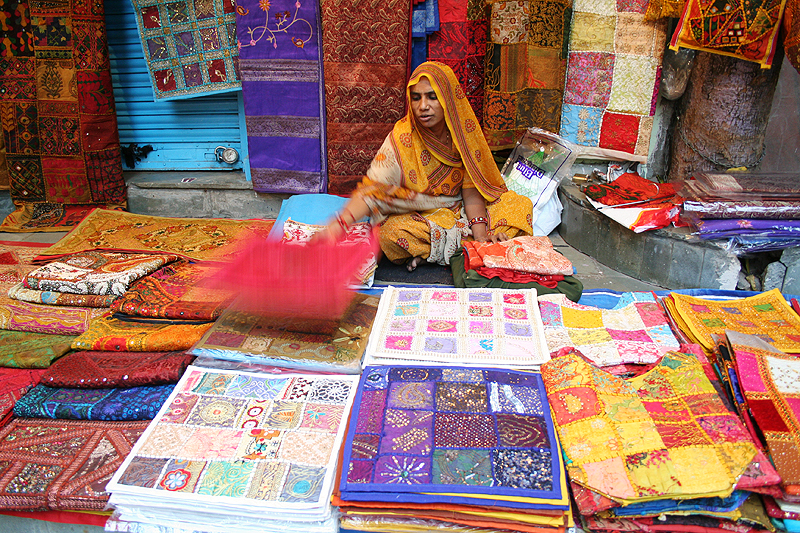
They sell lovely things here – perhaps if they had a set price for everyone, they’d end up making more money overall? In any case, I don’t think I’m going to be welcome around here again! When I think about it.. isn’t this what high street stores do, just less obviously? They get people in the far East to produce the goods for a fraction of what they actually sell it for back in the West..
Moving on, we hit the road, headed for Haridwar and Rishikesh, two of the most holiest Hindu places in India.
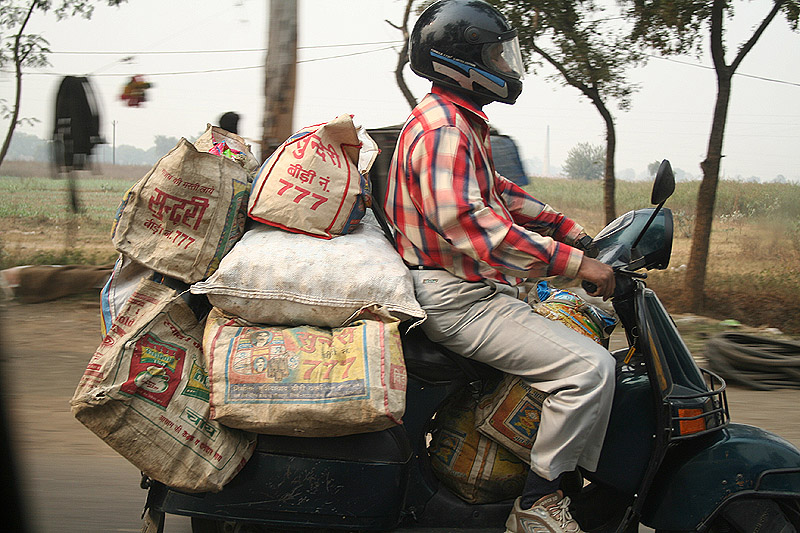
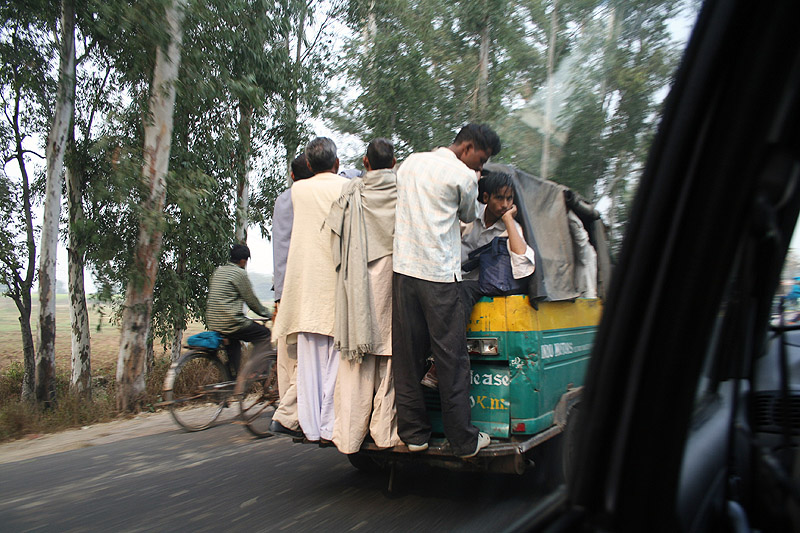
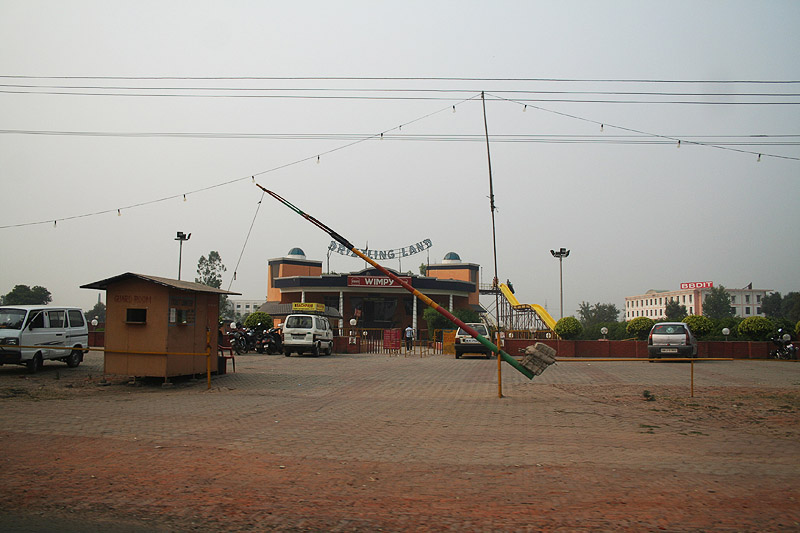
Along the way, I took some shots out of the window, something I’m quite a fan of it seems!
They have Wimpy!Â
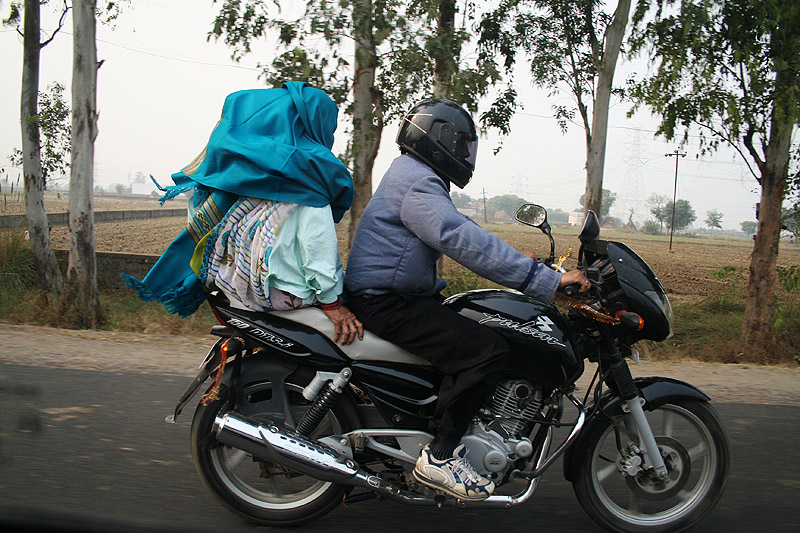
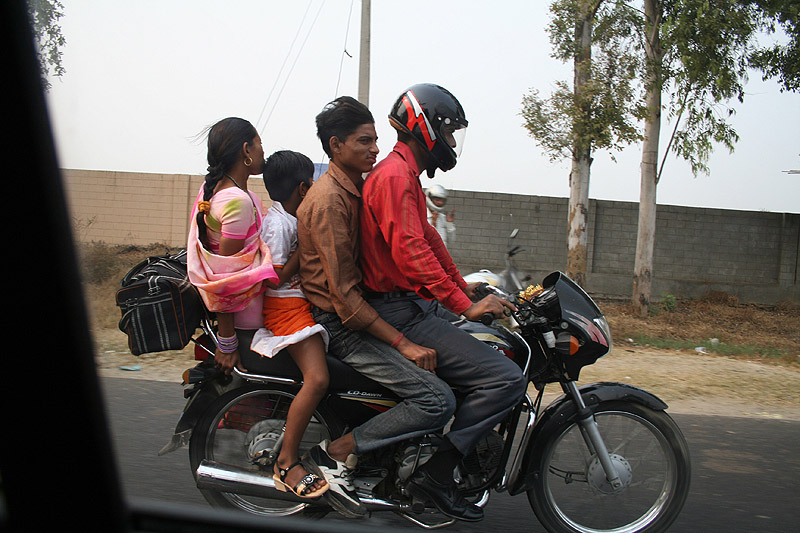
I like how only the driver has a helmet.
We came across monkeys! We stopped the car but were warned not to get out, because these animals will grab anything (I found this out by experience later in the trip), and they could attack as they’re not as accustomed to humans compared to monkeys in other areas such as temples which are frequented by humans regularly.
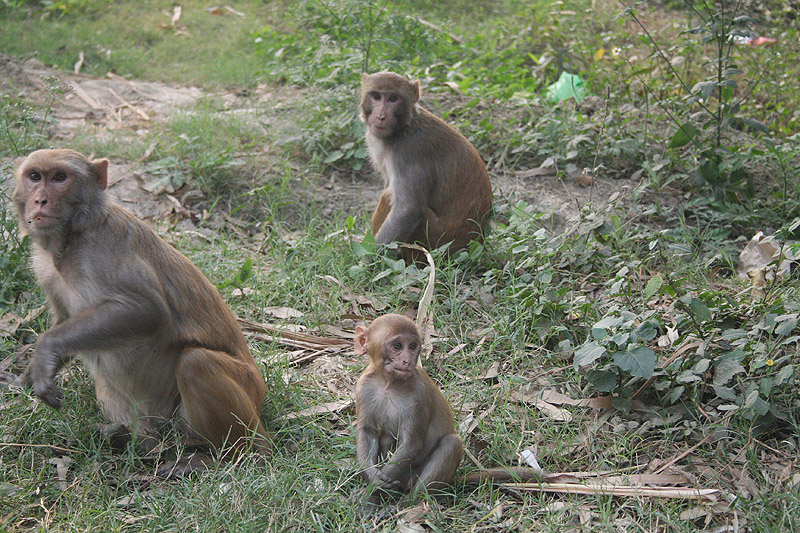
Conveniently we had some fruit on us.
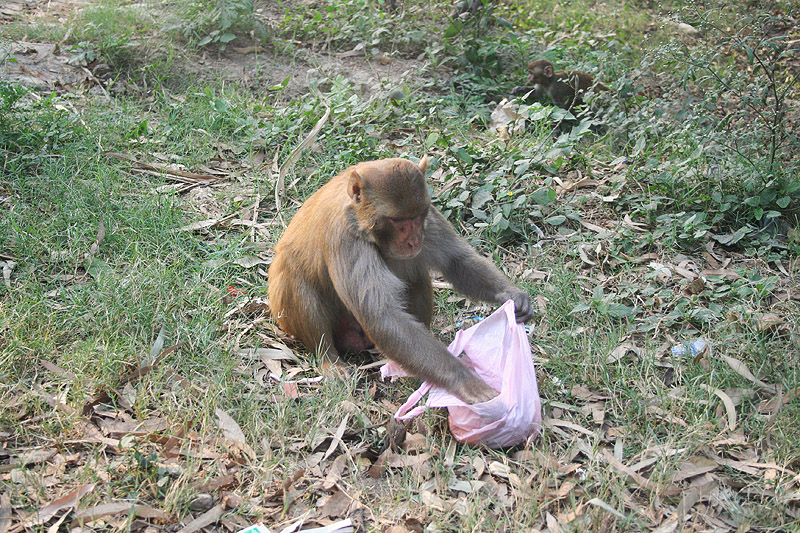
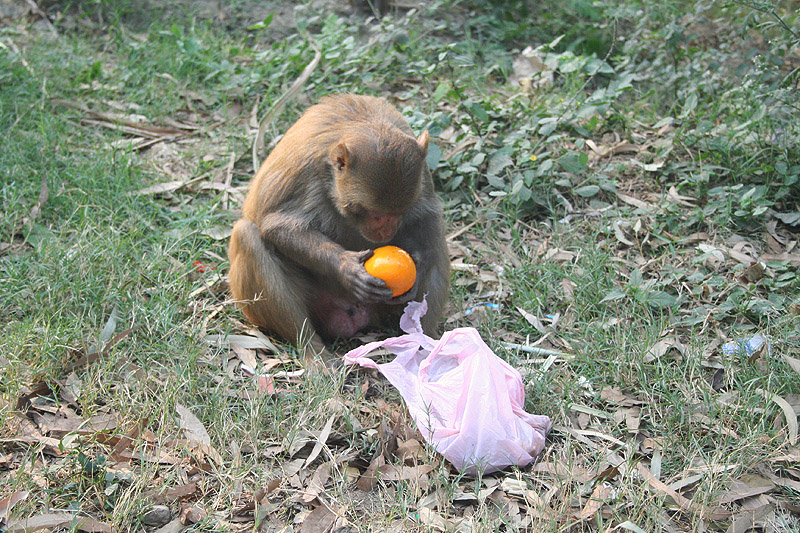
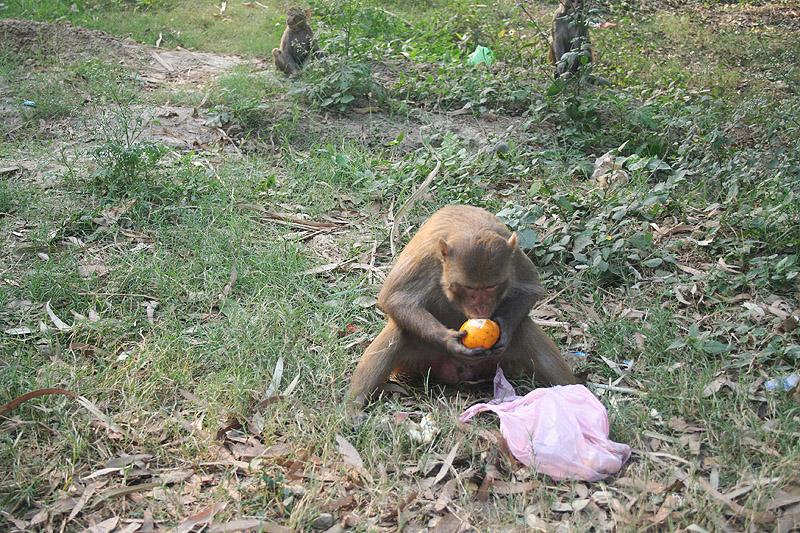
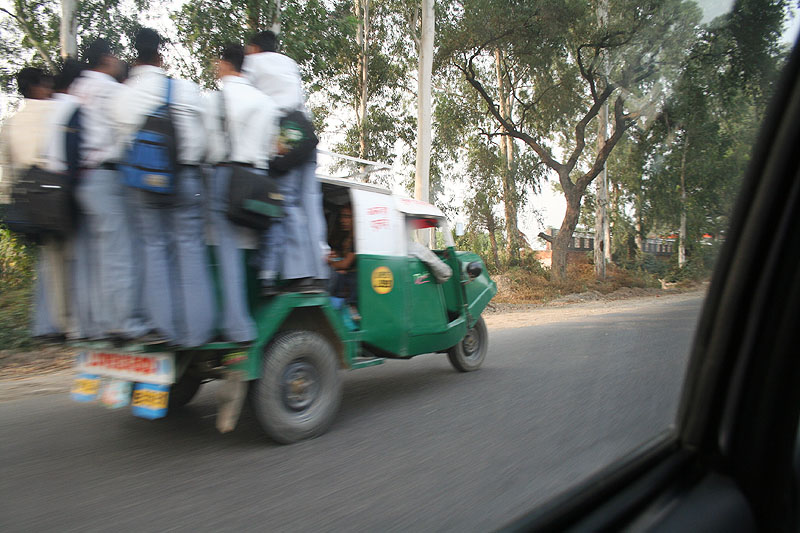
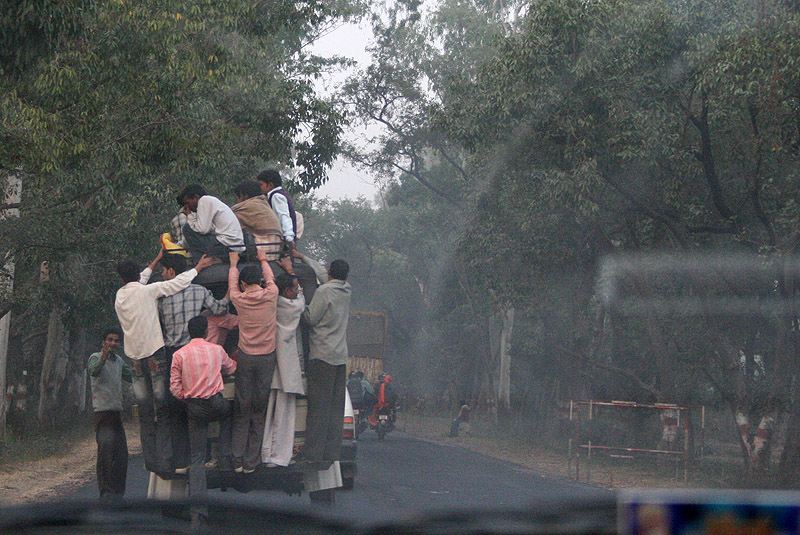
Indian roads are a nightmare. I wish I’d recorded the sound of being on the road, which consists of constant honking. There’s no concept of lanes – people don’t wear seatbelts or helmets, overtake dangerously and don’t let others cut in front, which, combined together is highly risky! A lot of cars don’t even have side mirrors.Â
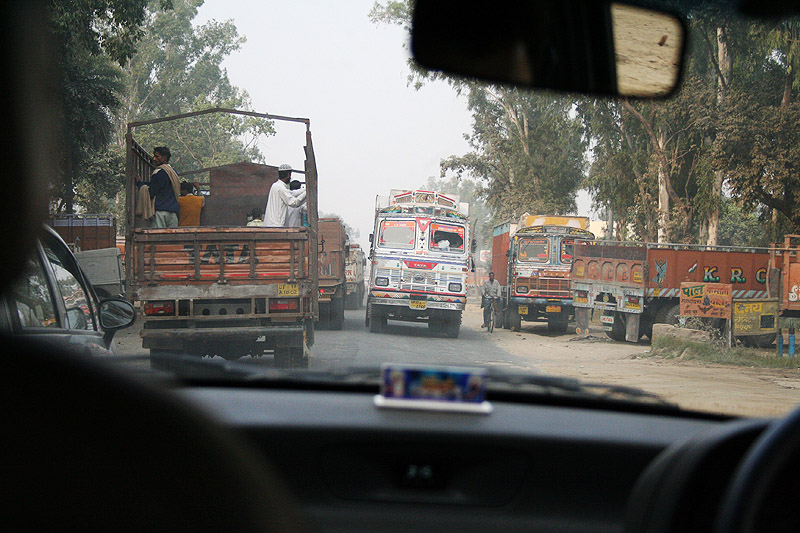
Funnily enough, I didn’t see a single case of road rage. People just get on with driving, and even when they almost crash into another vehicle, there’s no sign of anger at all. They barely flinch. I love how the trucks are decorated with lights and paintings.  In comparison, driving in London seems quite boring! Of course, I wouldn’t attempt driving myself in India unless I really had to!
One thing I absolutely loved about travelling by road are the little tea places which have amazing food and deliciously sweet masala tea. Often they’d be run by just one person in a deserted stall with nothing around, but their cooking skills were just amazing. I must have been so intrigued by all the food I ate that I don’t think I took a single picture of these wonderful little roadside places. :/
I did take a picture of this though:
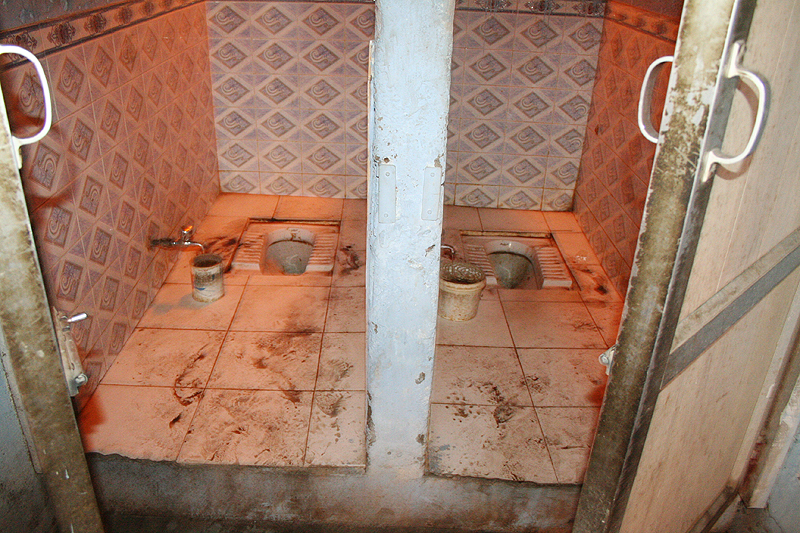
I didn’t use it.
We got to Haridwar in the evening.
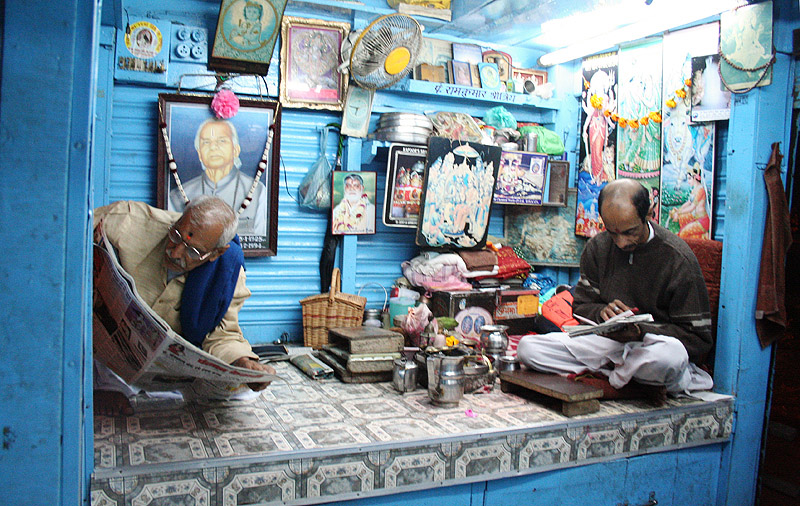
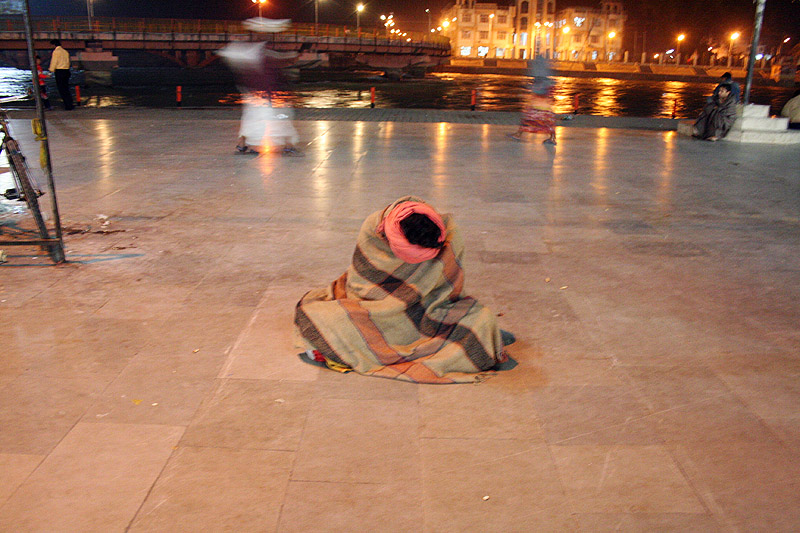
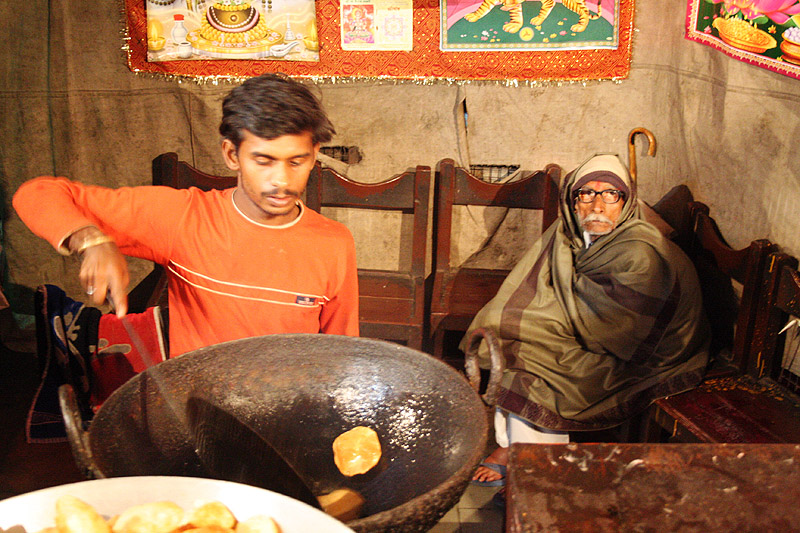
We went back early the next morning, before sunrise.
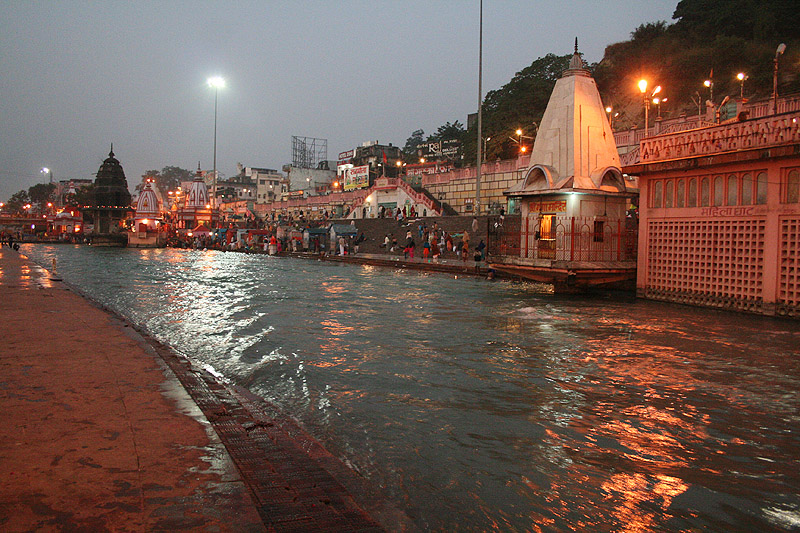
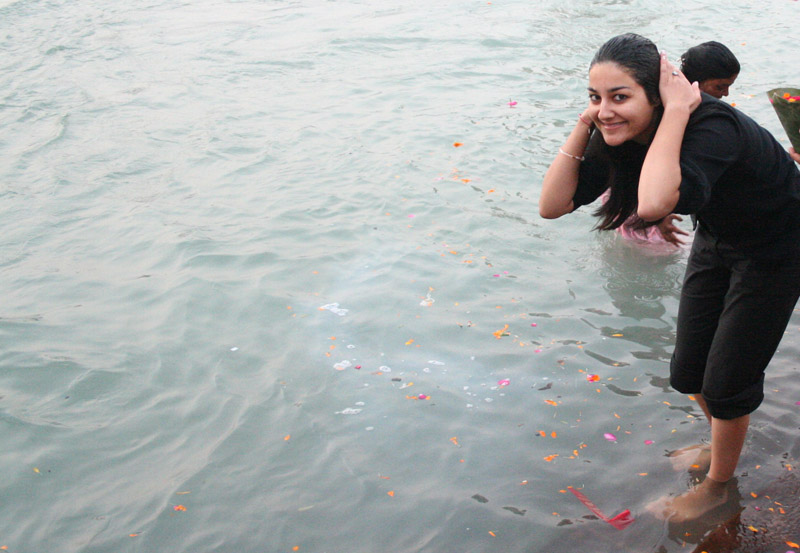
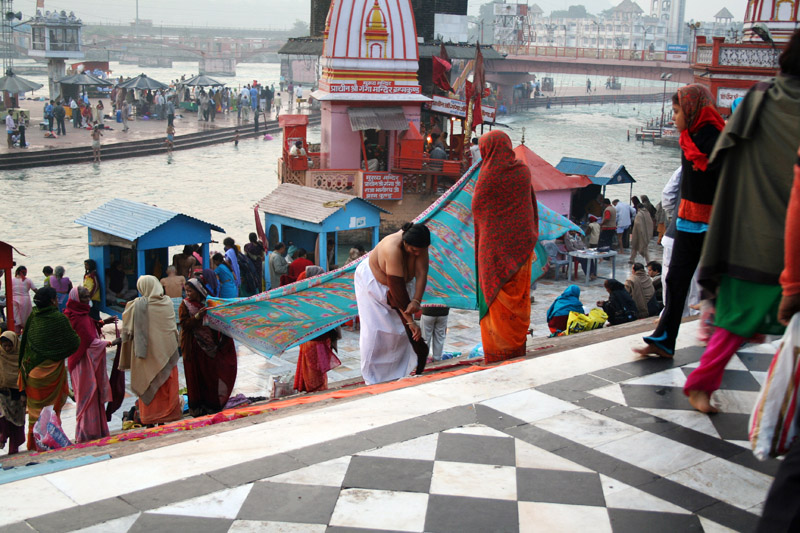
Haridwar translates to gateway to god, and it’s regarded as one of the seven holiest places to Hindus. People come to this ancient place to bathe in the River Ganges, and doing so is thought to wash away one’s sins.
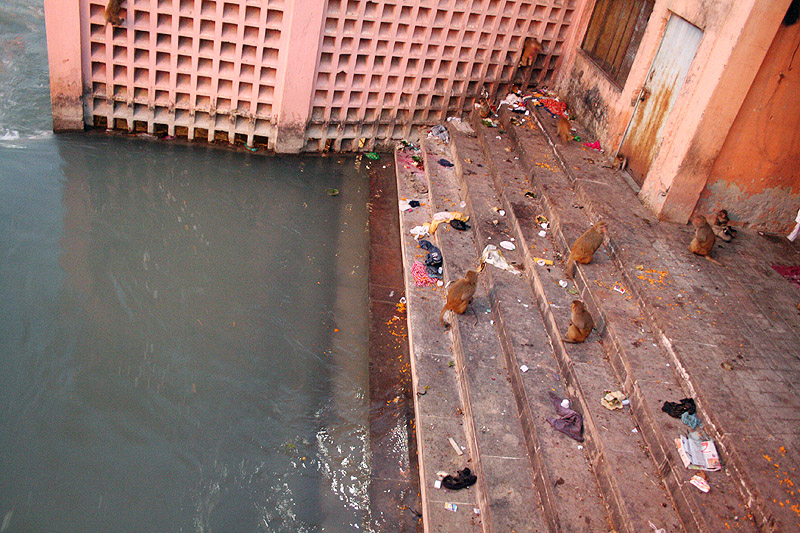
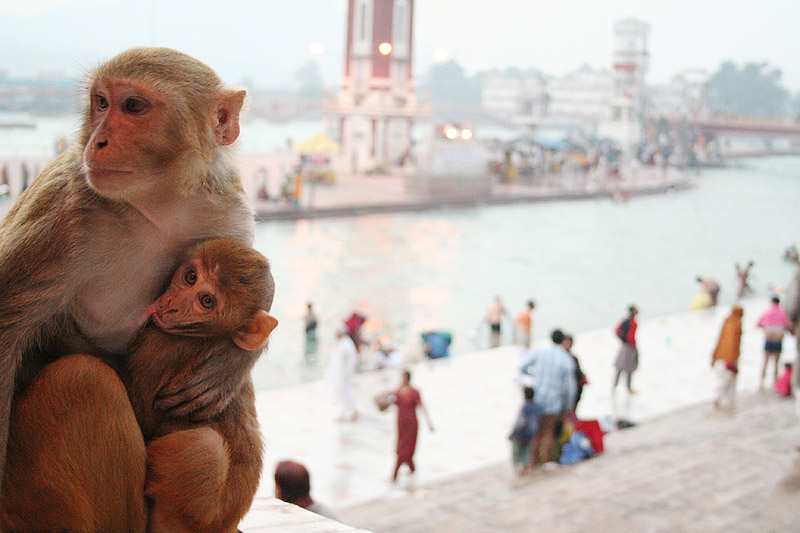
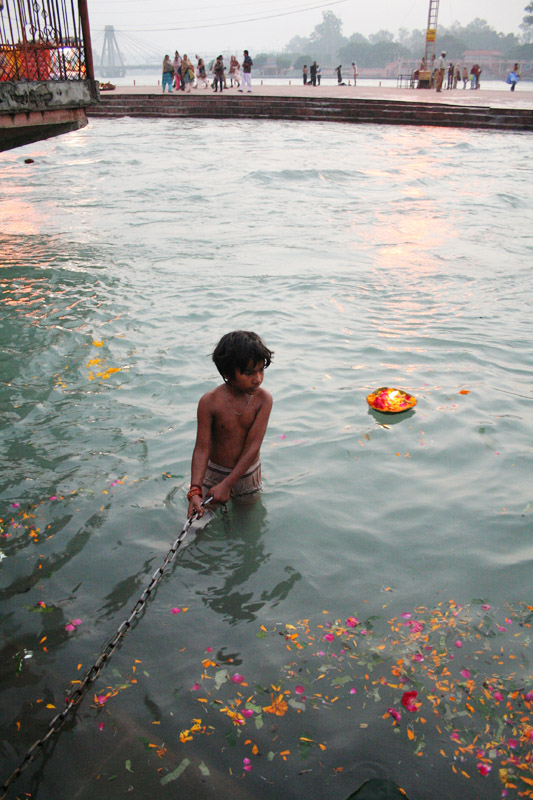
The water was freezing! I mean, it was around 6:30am, yet some of the people here didn’t seem to be discouraged by the temperature.
I was!
There were many temples dotted around the area.
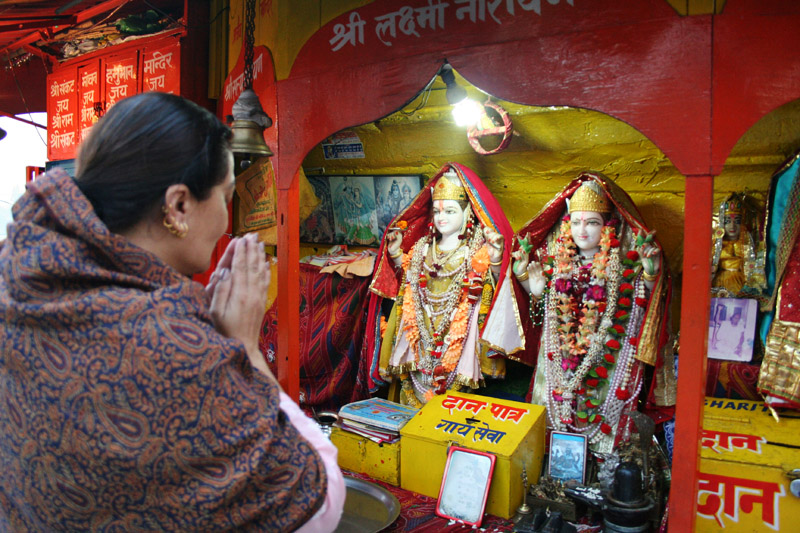
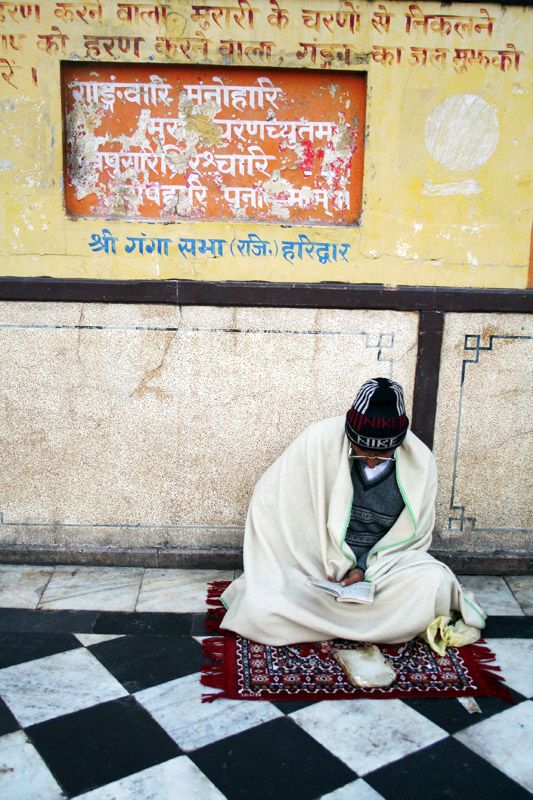
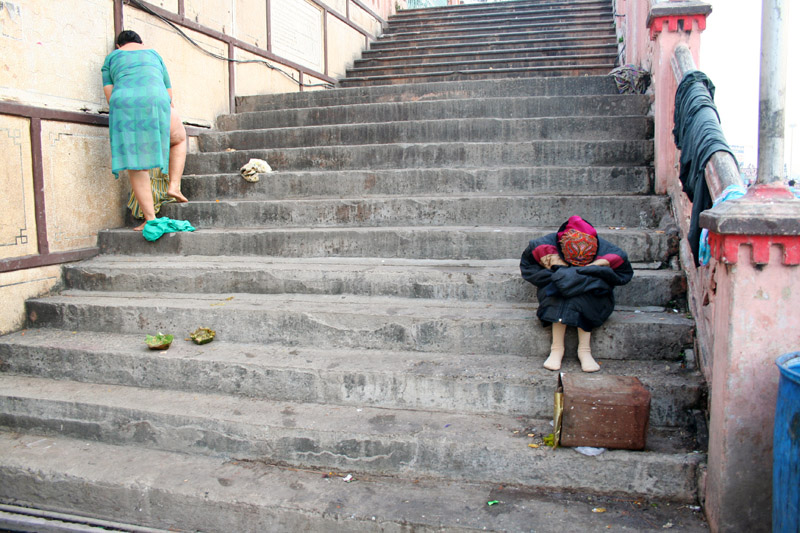
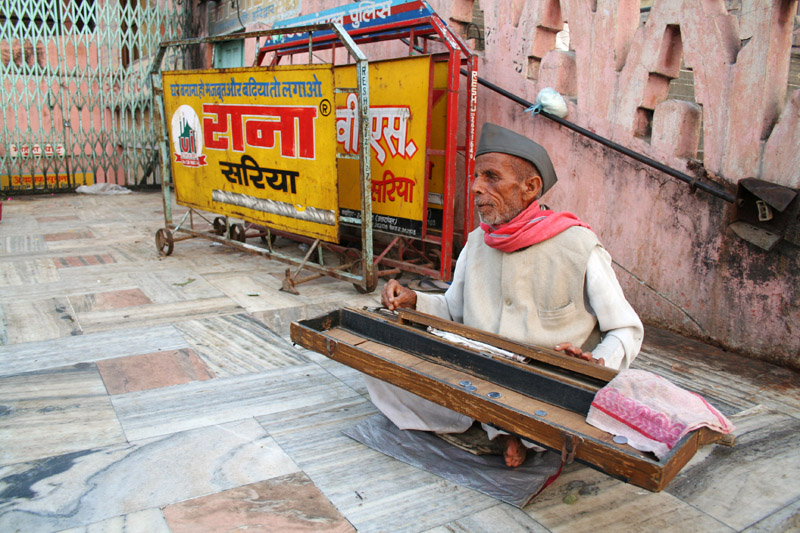
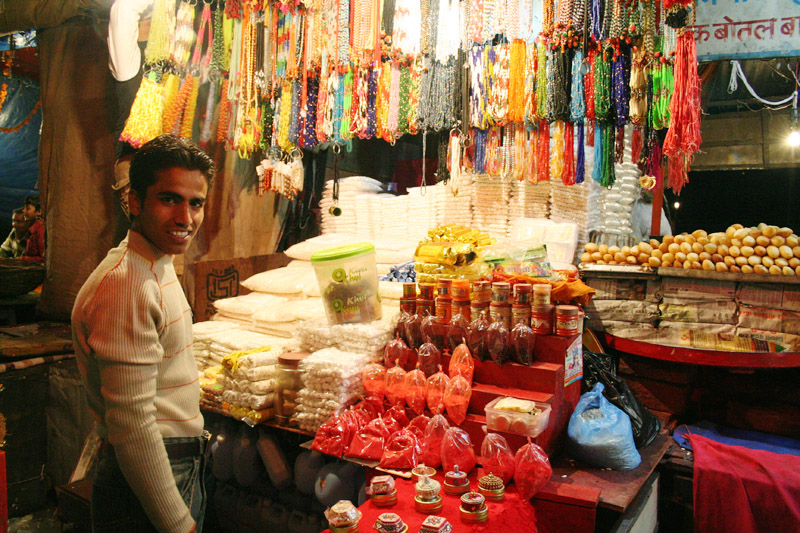
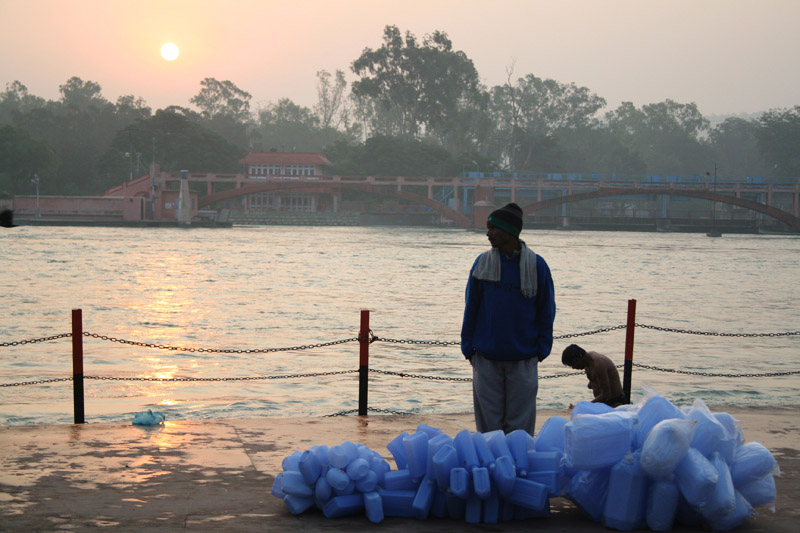
There were people selling bottles for the public to fill up with water from the Ganges to take with them. People often drink the water as well. Of course the Ganges is highly polluted, but telling this to a devout Hindu could easily offend them. I was given some of the river water in a temple to drink, which I did. It was surprisingly sweet and tasty.
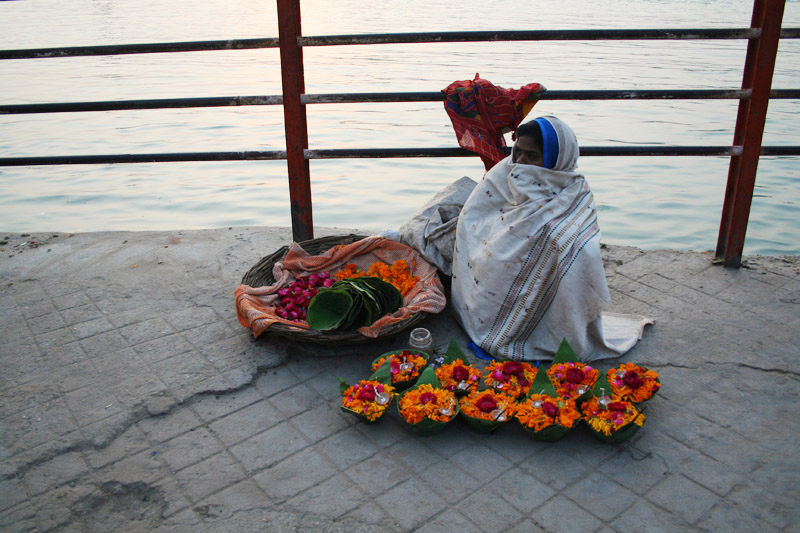
There were also many people like this selling flowers which are put into the river as part of a blessing ritual.
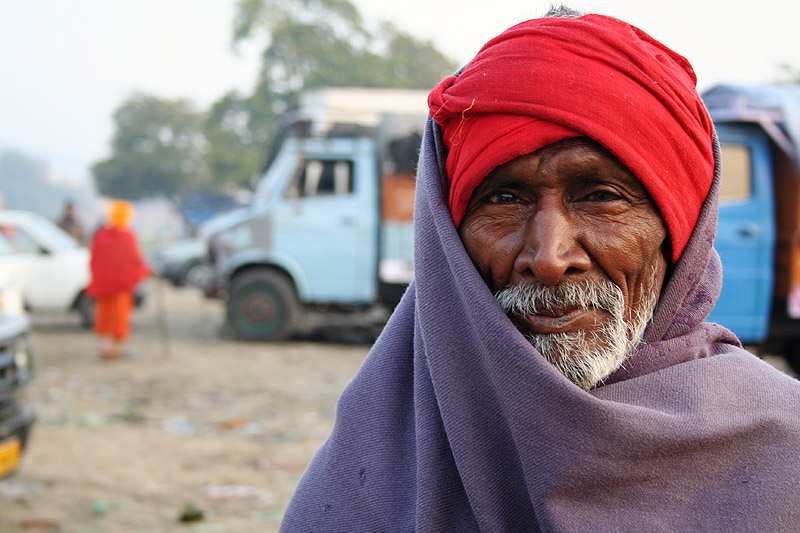
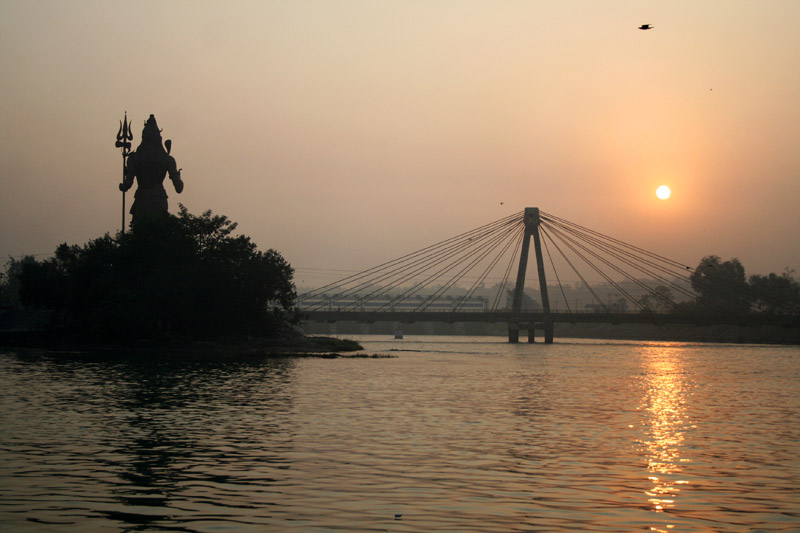
From Haridwar it was a half hour drive to another holy place by the river, Rishikesh.
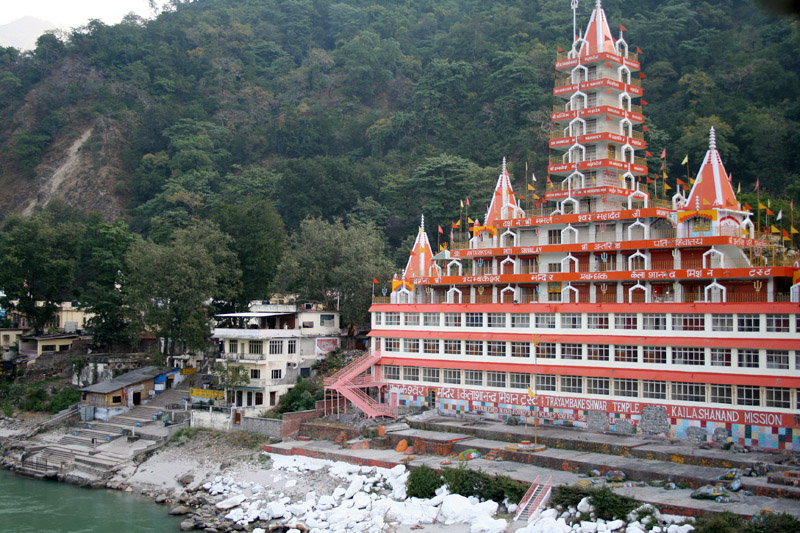
It is here that the Ganges leaves the foothills of the Himalayas, which is why it’s also known as the gateway to the Himalayas.
Rishikesh is often referred to as the yoga centre of the world as well.
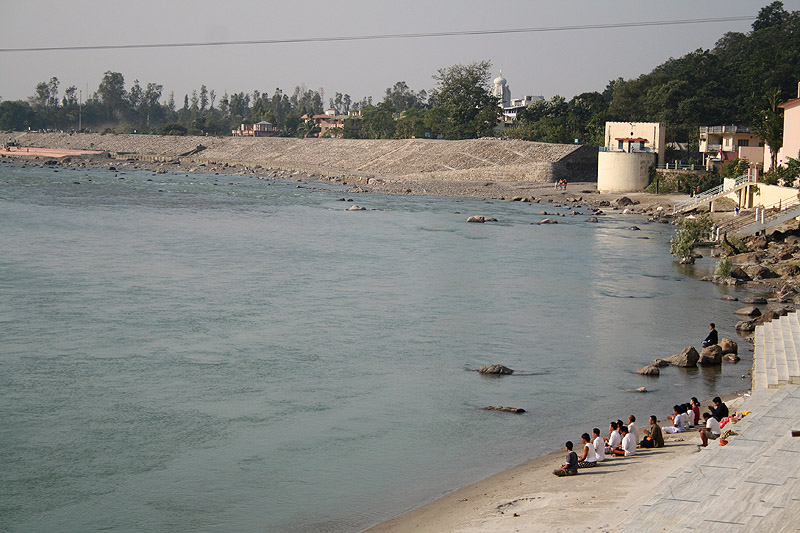
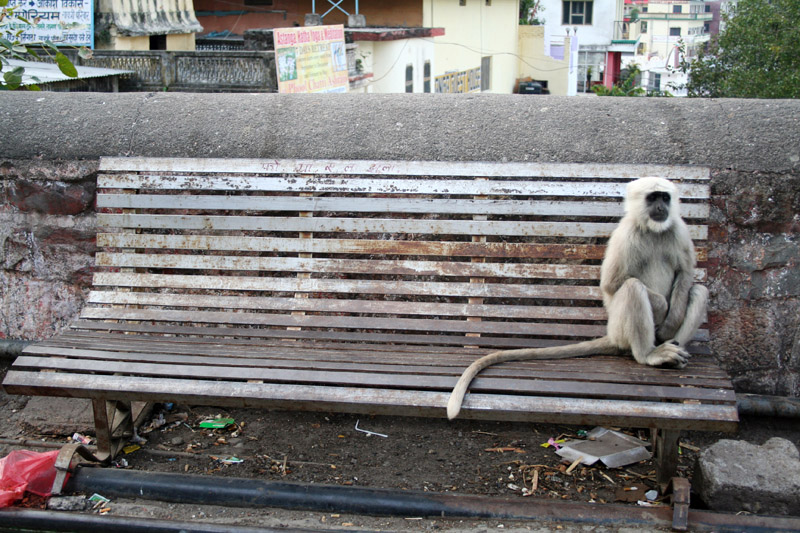
: )
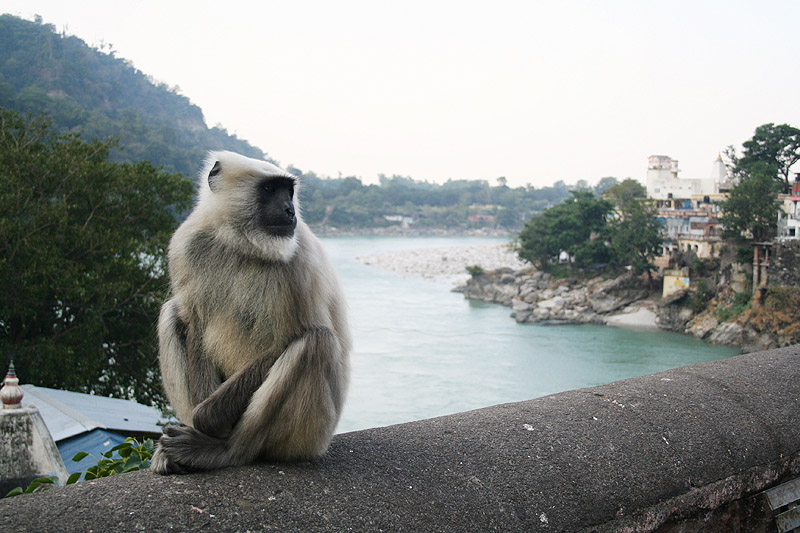
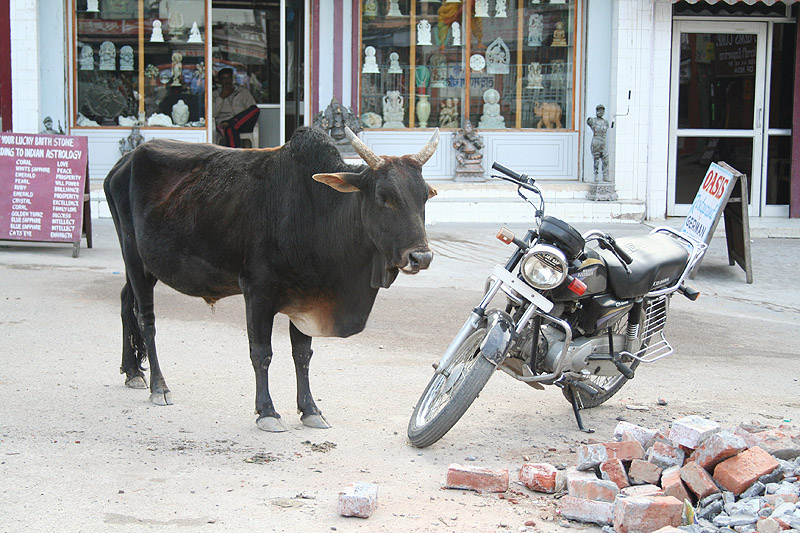
The temple a few shots above has 13 levels,with numerous rooms containing statues of Hindu gods.
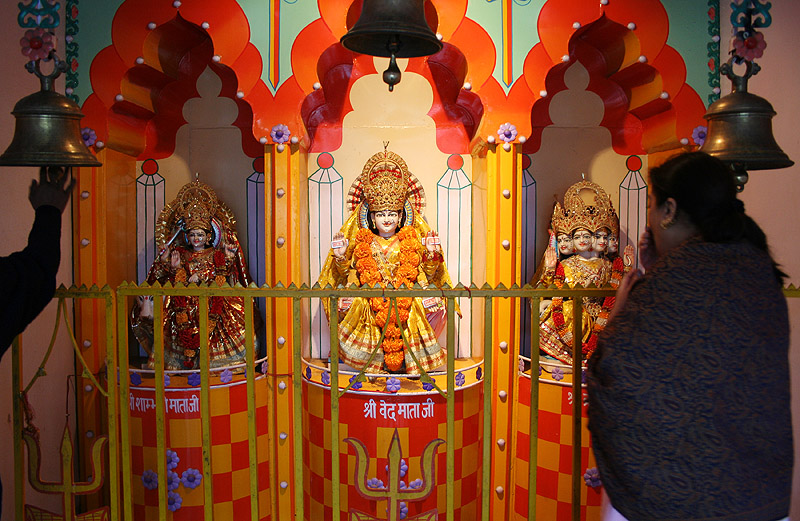
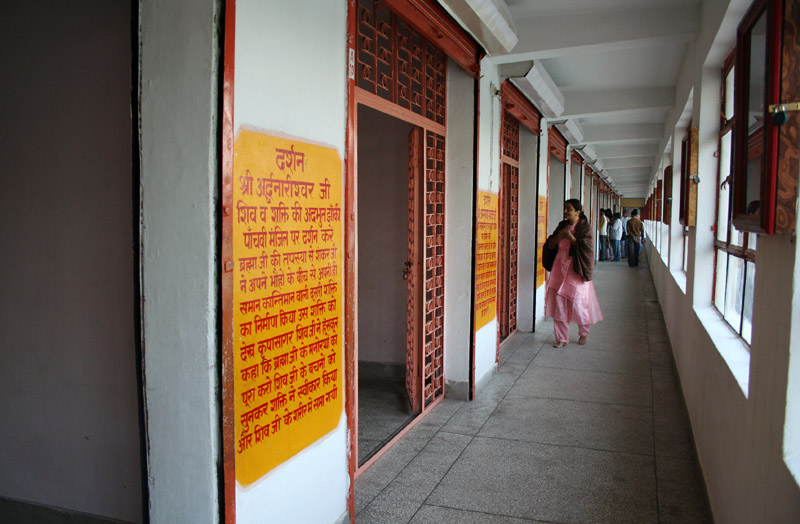
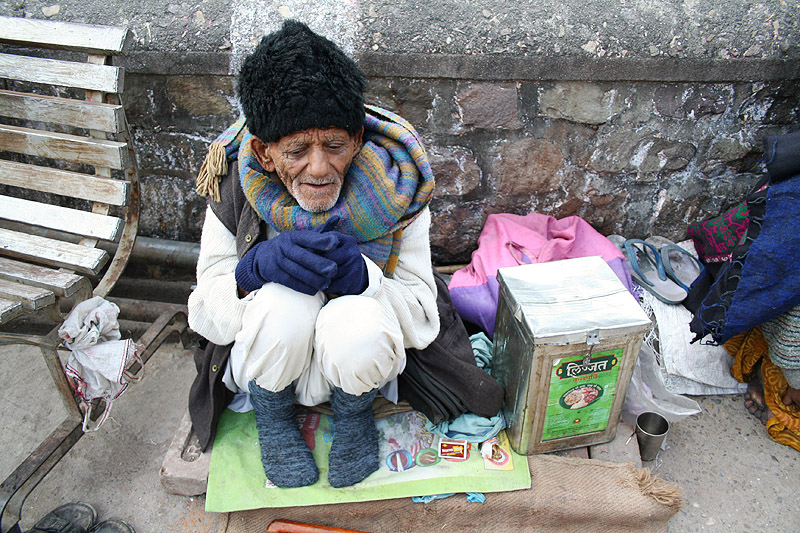
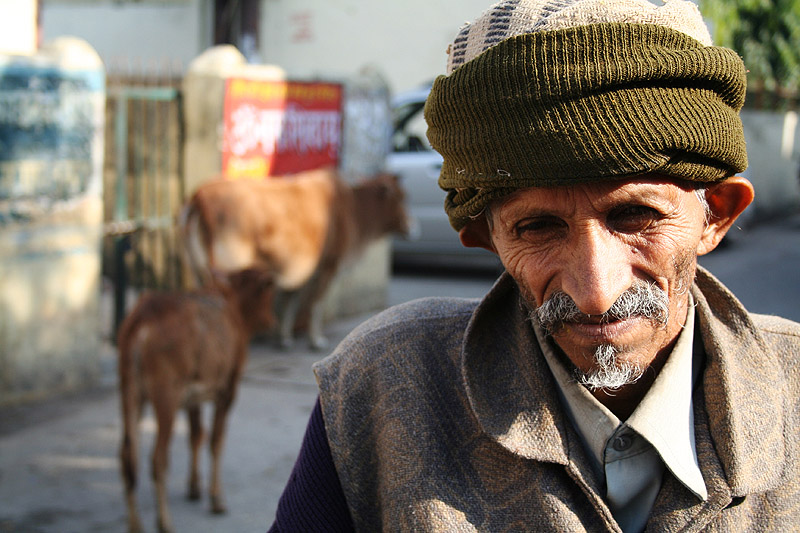
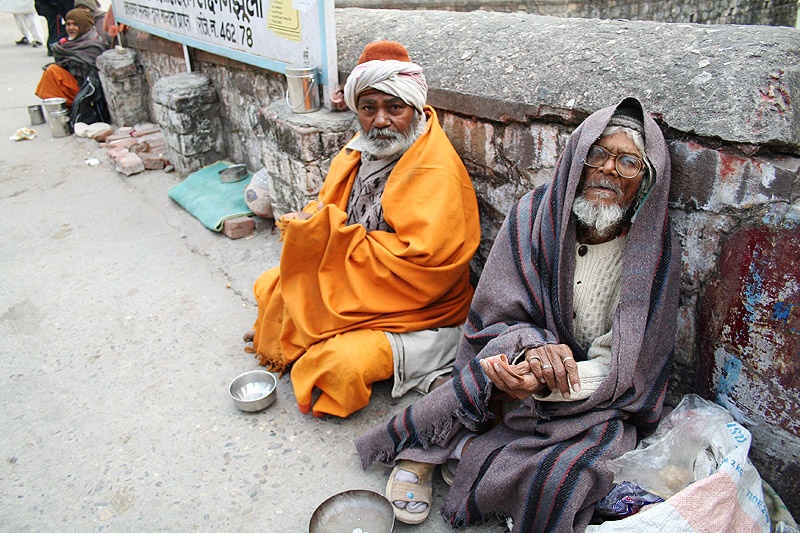
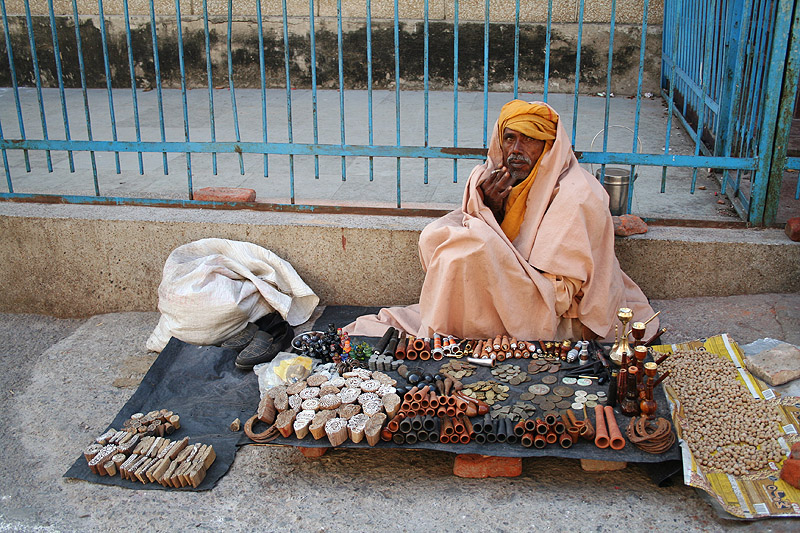
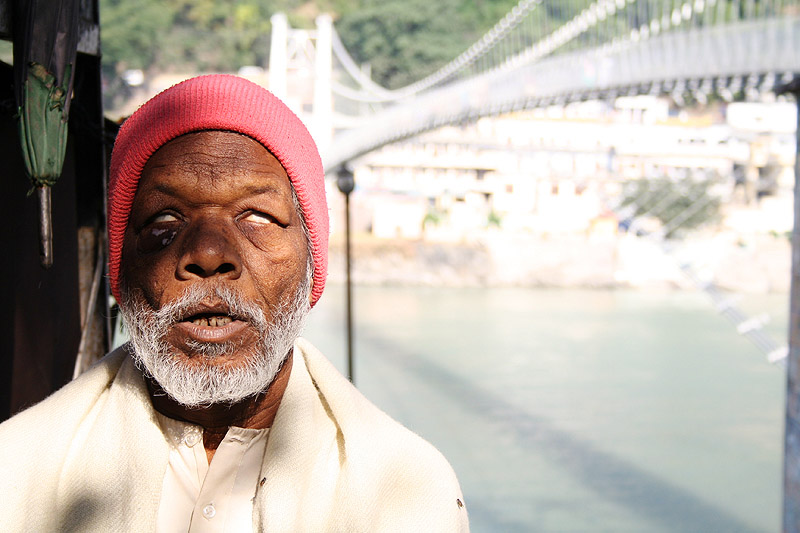
It was an enlightening experience visiting these two holy places. Religion plays a huge part in the lives of Indians, and whatever your beliefs, there is a great atmosphere here.
Next blog – Shimla, the ‘Queen of Hills’ in the north-west Himalayas..